

Obesity is not only about weight or body shape; it can strain the leg veins and the health of blood vessels throughout the body. At Bluesky Phlebology we check varicose veins, leg swelling and circulation together with weight management.
Interest in obesity and metabolic medications such as Mounjaro, Wegovy and Ozempic is growing, but drug treatment should be decided only after reviewing current weight, BMI, other conditions, current medication and possible side effects.
For people with varicose veins, leg swelling or chronic venous disease in particular, weight gain can affect venous and abdominal pressure, so it is worth looking at weight management and the vessels together.
If you are considering a weight management clinic in Busan, Bluesky Phlebology looks beyond weight loss alone to varicose veins, leg swelling, chronic circulation problems and the risk of arterial disease.
Many people looking for a weight management clinic in Busan first want to know whether they can be prescribed medications such as Mounjaro, Wegovy or Ozempic. But managing obesity is not just about bringing the number on the scale down.
Obesity can be linked to metabolic conditions such as high blood pressure, high blood sugar and abnormal cholesterol, and it can affect the pressure on the leg veins. People with varicose veins, or with recurring leg swelling, heavy calves or night cramps, should have their leg vessels checked alongside weight management.
Bluesky Phlebology is a vascular surgery clinic in Oncheonjang, Dongnae-gu, Busan, and we look at the strain that obesity places on varicose veins and circulation.
Mounjaro, Wegovy and Ozempic are all medications that attract a lot of interest in relation to obesity or metabolic disease. Each, however, can differ in ingredient, approved use, eligible patients, dose adjustment and precautions.
So rather than settling on a particular drug in advance, a consultation is needed to confirm whether drug treatment is appropriate for you.
| What we check | Why |
|---|---|
| BMI and waist circumference | To assess the degree of obesity and abdominal obesity |
| Blood pressure, blood sugar and lipids | To assess metabolic risk at the same time |
| Varicose veins and leg swelling | To see how weight gain is straining the leg veins |
| Existing conditions | Diabetes, high blood pressure, heart and kidney disease are reviewed together |
| Current medication | To check for interactions and the risk of low blood sugar |
| Digestive symptoms and history | To see whether any symptoms call for caution with medication |
| Capacity for exercise | To make the weight plan realistic |
Obesity medications such as Mounjaro and Wegovy need to be combined with dietary control and more physical activity. Ozempic is widely known for weight loss and often asked about, but approved uses and eligible patients can differ between medications. When a drug is considered for treating obesity, the approved indications, the patient's condition and other illnesses should be reviewed before deciding.
Varicose veins develop when the valves inside the leg veins weaken, so blood cannot flow smoothly back toward the heart and instead flows backward or pools. Obesity is one of the factors that can influence varicose veins and chronic venous disease.
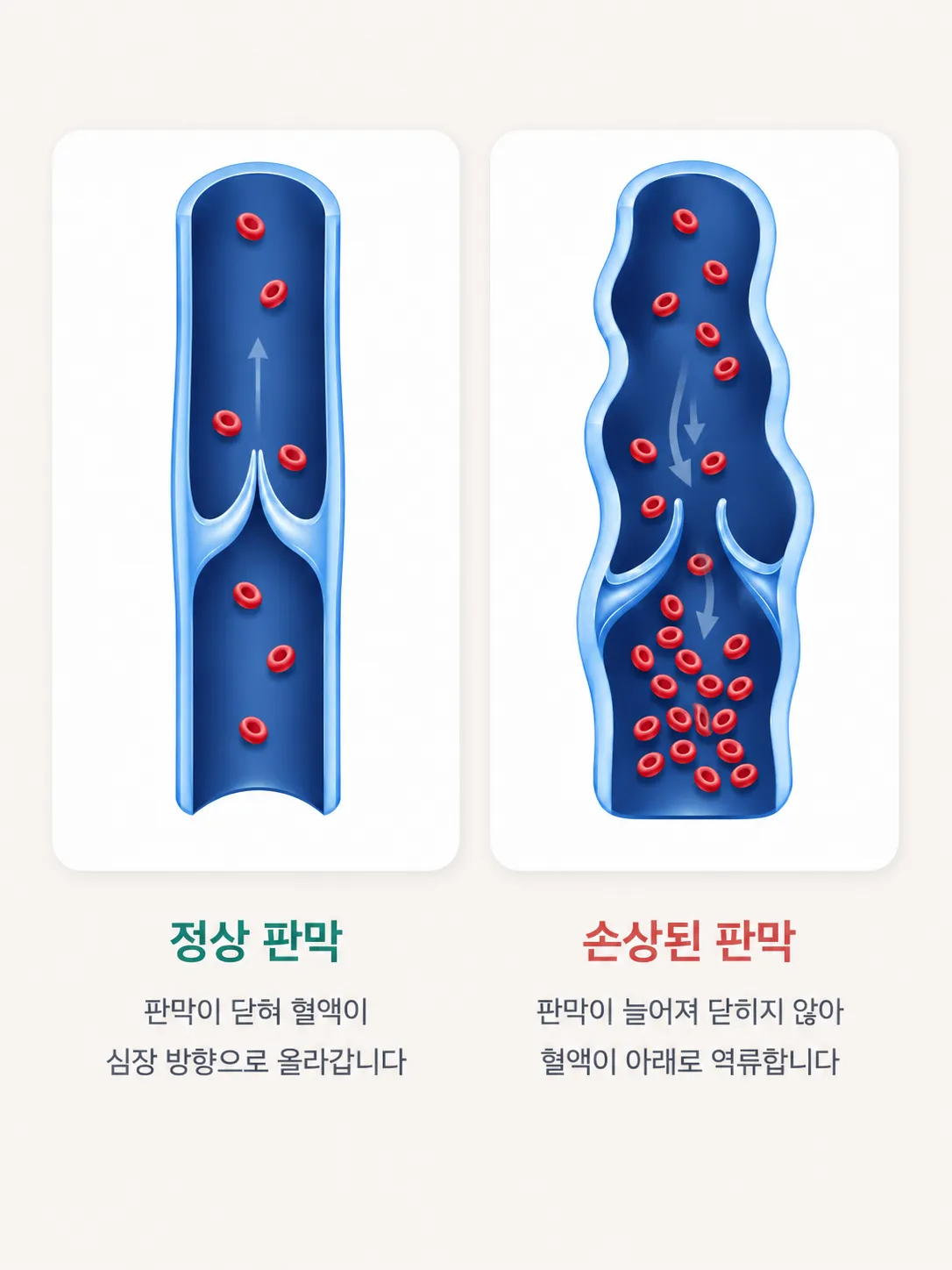
As weight increases, the pressure on the leg veins can rise. With abdominal obesity, pressure inside the abdomen increases, which can hinder venous blood flowing up from the legs toward the heart.
That said, not everyone with obesity develops varicose veins, and not everyone with varicose veins needs surgery. Symptoms and the state of the vessels should be confirmed with duplex ultrasound.
In some cases it is worth checking the leg vessels alongside weight management.
| Symptom or situation | Why it should be checked |
|---|---|
| The legs swell often since gaining weight | Weight strain and venous reflux may be present together |
| The calves feel heavy every evening | May be linked to reduced venous circulation |
| The legs are uncomfortable after long standing or sitting | Symptoms may stand out when venous pressure rises |
| Frequent calf cramps at night | Can be one of the symptoms of varicose veins |
| The legs keep bothering you though the veins are hard to see | Fatty tissue can hide bulging veins |
| You have high blood pressure, diabetes or abnormal cholesterol | Obesity and the risk of vascular disease should be checked together |
| You are considering Mounjaro or Wegovy | It is better to look at vascular health as well as weight |
Leg swelling and heaviness are not always explained by weight alone. If leg symptoms keep coming back, it is worth checking for varicose veins, chronic venous disease and arterial disease alongside weight management.
Weight management can help reduce the strain on the leg veins. But vein valves that are already damaged, or venous reflux that has already developed, are unlikely to recover through weight loss alone.
In other words, weight management does not replace treatment for varicose veins; it is something to consider alongside it, to reduce the strain on the leg vessels and to help manage symptoms and recurrence.
If leg swelling, heaviness, numbness or night cramps keep returning, venous reflux should first be checked with duplex ultrasound.
Our weight management clinic does not look at the number on the scale alone. We also check the strain obesity places on the leg veins and on vascular health throughout the body.
Current weight, BMI, waist circumference, recent weight change, eating patterns and activity levels are reviewed.
Blood pressure, blood sugar, cholesterol, diabetes and cardiovascular risk factors are reviewed.
Leg swelling, heaviness, numbness, night cramps, bulging veins and skin colour changes are checked.
If varicose veins are suspected, duplex ultrasound shows where venous reflux occurs and how severe it is.
The management plan is set by weighing the patient's weight, vessels, other conditions, suitability for medication and lifestyle.
Obesity treatment is not decided in a single way. The plan has to differ according to the patient's weight, vessels, other conditions, lifestyle and capacity for exercise.
Portion sizes, meal times, alcohol, late-night eating, activity and sleep are reviewed. The goal is sustainable weight management and less strain on the vessels, rather than rapid short-term loss.
With varicose veins or leg swelling, the intensity and type of exercise are adjusted. Walking, using the calf muscles and light strength training can help.
Obesity medications such as Mounjaro and Wegovy may be considered depending on the patient's condition. Approved uses and eligible patients differ between medications, so the decision follows a consultation.
Where varicose veins or chronic venous disease are also present, medical compression stockings can help.
If duplex ultrasound confirms venous reflux and symptoms persist, varicose vein treatment may be needed. Options include radiofrequency, laser, VenaSeal, ClariVein, sclerotherapy, stripping and others, and the right method depends on the patient's vessels.
Obesity medication is not applied the same way to every patient. Suitability must be judged after checking BMI, other conditions, current medication, blood pressure, blood sugar, liver and kidney function and the vessels.
Weight management also does not replace varicose vein treatment. Losing weight can help reduce the strain on the leg veins, but venous reflux that has already progressed is unlikely to disappear on its own.
Bluesky Phlebology is a vascular surgery clinic in Oncheonjang, Dongnae-gu, Busan.
A former university hospital professor, Dr. Bang has spent many years treating vascular disease and performing vascular surgery. In our weight management clinic, too, the aim is not weight loss alone but care that also looks at varicose veins, leg swelling, chronic venous disease and the risk of arterial disease.
Obesity medications such as Mounjaro and Wegovy are considered after a consultation that checks BMI, other conditions, current medication, the vessels and possible side effects. They are not prescribed the same way for everyone; whether drug treatment is used, and how care is managed, depends on the patient.
Ozempic is widely known as a weight-loss drug and often asked about, but approved uses and eligible patients can differ between medications. When a drug is considered for treating obesity, the approved indications and the patient's condition must be reviewed together.
Varicose veins alone do not decide whether obesity medication is used. It is best to plan weight management after also checking leg swelling, venous reflux, other conditions, current medication and capacity for exercise.
Weight management can help reduce the strain on the leg veins. But vein valves that are already damaged, or venous reflux that has already developed, are unlikely to recover through weight loss alone.
Obesity can strain the leg veins and lymphatic circulation. But not all leg swelling is due to obesity; varicose veins or chronic venous disease may also be present.
What matters is whether the clinic looks only at weight loss, or also at blood pressure, blood sugar, lipids and vascular health. Especially with leg swelling, varicose veins or chronic circulation problems, an approach that checks the leg vessels alongside weight management may be needed.
Even with medication, diet and physical activity still need managing. Especially with varicose veins, it is better to choose activities that help leg circulation and suit your vessels, rather than pushing too hard.
Many people come looking for a Mounjaro, Wegovy or Ozempic prescription, but weight management does not end with choosing a drug. If leg swelling, varicose veins or heavy calves are also present, the strain that weight gain places on the vessels should be checked as well.