

EN
Surgical treatment for varicose veins
ENDOVENOUS LASER ABLATION

Laser Treatment for Varicose Veins

EVLA · Laser Treatment

We find the affected vein precisely and treat only the segment that needs it.
Laser thermal energy closes the vein where reflux has developed
from inside the vessel.

Thermal vein closure
Optical fiber catheter
Ultrasound-based assessment
Move your cursor and the light follows
KEY SUMMARY

Laser treatment for varicose veins inserts a thin optical fiber into the vein where reflux is confirmed, then uses laser thermal energy to close the affected vein from within.

Along with radiofrequency, it is one of the main endovenous closure treatments for varicose veins, and can be considered when reflux in the saphenous vein is confirmed.

Not every case of varicose veins is suitable for laser treatment. The decision should follow duplex ultrasound findings together with the site of reflux, the vein diameter and the severity of symptoms.

01
What is laser treatment?

Laser treatment for varicose veins —
A treatment that closes a refluxing vein from the inside.

Blood in the leg veins should travel up toward the heart. When the valves inside the veins weaken, blood flows backwards; pressure rises and the veins can widen or bulge in a twisting shape.

Laser treatment inserts an optical fiber into the refluxing vein and delivers laser thermal energy to close the affected vein.

Learn more about varicose veins →
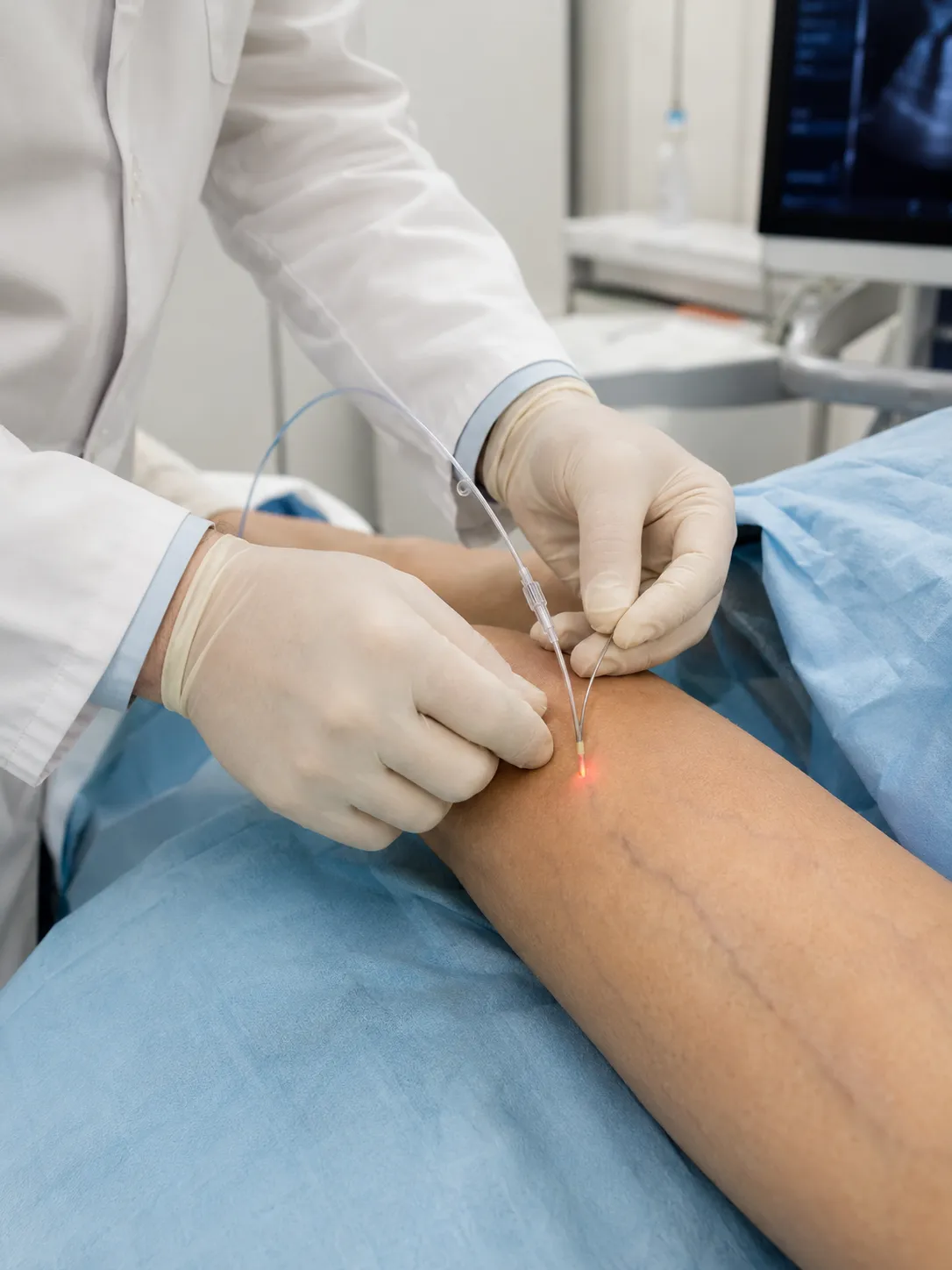
Laser energy through an optical fiber
A thin optical fiber is positioned inside the vein, then laser thermal energy is delivered.
Ultrasound-based treatment planning
We check where the reflux begins, the vein diameter and the distance from the skin, then set the direction of treatment.
Optical fiber catheter during laser treatment for varicose veins
Optical fiber insertion during laser treatment
02
Who it applies to

When laser treatment for varicose veins may be considered

Laser treatment can be considered when duplex ultrasound confirms reflux in the main veins, including the saphenous vein, and the symptoms and vein condition meet the treatment criteria.

Legs often feel heavy and tire easily
Leg discomfort worsens when standing or sitting for long periods
Calf pain, heat, numbness or night cramps keep returning
Leg veins bulge or look twisted
Leg swelling gets worse as the day goes on
Compression stockings or lifestyle care no longer control the symptoms
Signs of chronic venous disease such as skin colour change, itching or inflammation
Reflux in a main vein is confirmed on duplex ultrasound
More than the veins you can see,
the direction of flow inside matters
03
When treatment is needed

When venous reflux continues for a long time,
it can lead to chronic venous disease.

Varicose veins are not simply a cosmetic matter of bulging veins. They are a circulatory disease in which weakened valves let blood flow backwards, raising the pressure inside the leg veins.

Early on it can begin with common symptoms such as heaviness, fatigue and swelling. But if reflux continues for a long time, it can lead to chronic venous disease with skin colour change, itching, eczema, pigmentation, inflammation or skin ulcers.
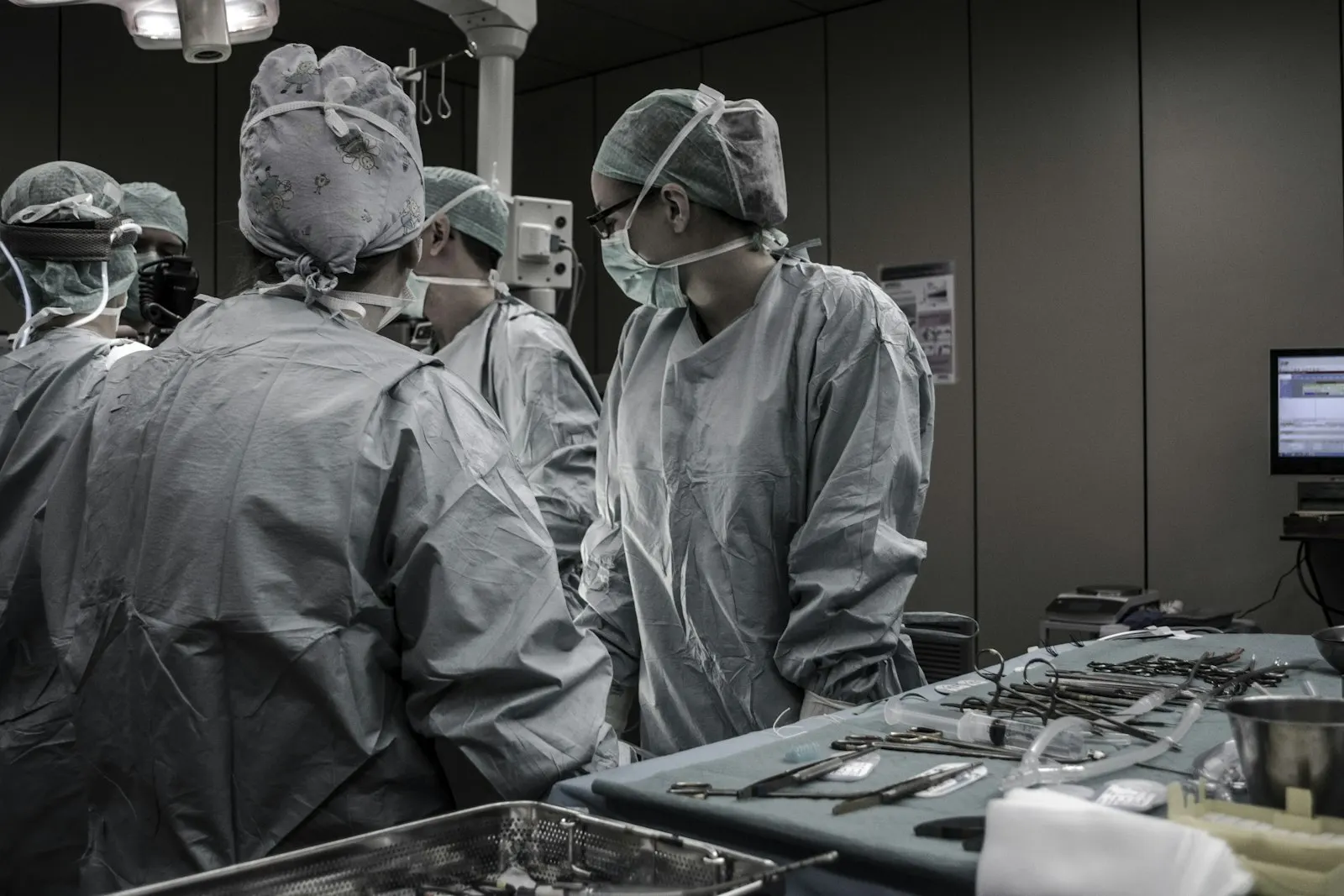
Consultation and diagnosis for laser treatment of varicose veins
Care that looks at symptoms and ultrasound findings together
04
Examination and diagnosis

Before laser treatment, duplex ultrasound maps the reflux.

Duplex ultrasound shows what cannot be seen from the skin: the direction of flow inside the vein, where reflux starts, how long it lasts, the vein diameter and its course.

See our treatment criteria →

01
Where reflux begins
02
The refluxing segment and its extent
03
Vein diameter and depth
04
Distance between skin and vein
05
How tortuous the vein is
06
Any sign of thrombus or inflammation
05
The laser treatment process

From examination to recovery guidance, step by step.

STEP 01
Duplex ultrasound
Confirm the location and degree of reflux and the veins that need treatment
STEP 02
Treatment plan
Review vein diameter, depth, course and distance from the skin
STEP 03
Anesthesia and optical fiber insertion
The fiber is placed inside the vein under ultrasound guidance
STEP 04
Laser energy delivery
Laser thermal energy closes the affected vein
STEP 05
Recovery and follow-up
Guidance on walking, compression care and follow-up ultrasound
06
Comparing treatments

Radiofrequency and laser are both thermal treatments, but they deliver the energy differently.

Both radiofrequency and laser close the affected vein with thermal energy delivered inside the vein.

The difference lies in how the energy is delivered. Radiofrequency transmits heat to the vein wall with radiofrequency energy, while laser delivers laser energy through an optical fiber.

Which treatment fits better depends on vein diameter, depth, tortuosity, the distance from the skin, the refluxing segment, and the patient's symptoms and daily life.

Treatment
Mechanism
Characteristics
Laser
Laser thermal energy delivered through an optical fiber
Closes the vein from the inside
Radiofrequency
Radiofrequency energy contracts and closes the vein wall
Endovenous thermal treatment
VenaSeal
Closes the vein with medical adhesive
Non-thermal, uses no heat
ClariVein
Mechanical stimulation combined with an agent
One of the non-thermal options
High ligation and stripping
Removes the affected vein directly
Considered when the vein condition calls for it
Before treatment,
an accurate diagnosis comes first
07
Features and limits

Key features of laser treatment for varicose veins

Laser treatment works from inside the affected vein to close it. It does not suit every patient, so examination and explanation beforehand matter.

01
Performed from inside the vein
02
Laser thermal treatment using an optical fiber
03
Treatment site and extent confirmed by ultrasound
04
Can be combined with other treatments depending on the vein
05
Recovery and discomfort vary from person to person
06
Not a treatment for every case of varicose veins
08
After treatment

Recovery matters as much as the treatment itself.

After laser treatment, temporary bruising, tightness, tenderness, a feeling of heat, stiffness or changes in skin sensation can occur.

Wearing compression stockings, walking, limiting exercise, and adjusting saunas or long periods of standing after treatment all follow the guidance you are given.

About medical compression stockings →

01
Light walking — It can help recovery, but follow the guidance on how much to do.
02
Compression care — If needed, you will be told how long to wear compression stockings.
03
Watching your symptoms — If pain, swelling or a feeling of heat persists, a visit may be needed.
04
Follow-up — If symptoms change or recurrence is suspected, duplex ultrasound is used to check.
09
Our approach at Bluesky Phlebology

We aim for vascular surgery care that does not miss small differences.

At Bluesky Phlebology we do not treat varicose veins as a problem of visibly bulging veins alone. We look at small leg symptoms, recurring swelling and subtle changes in flow, and decide the direction of treatment from there.

Dr. Bang Jeong-hee served as a university hospital professor for 30 years, treating a wide range of vascular conditions, and examines the state of the veins closely on the basis of more than 3,000 vascular operations.

3,000+
Vascular surgery experience
30years
University hospital professor
1doctor
Dedicated, focused care
Precise diagnosis based on duplex ultrasound
A treatment direction that considers symptoms and findings together
Choosing appropriately between radiofrequency, laser, non-thermal and conservative care
Calm, clear guidance on aftercare and recovery
Attention to small symptoms and subtle changes
Detail in FlowWe aim for vascular surgery care that checks both the unseen direction of flow and the small changes.
10
Frequently asked questions

Laser treatment for varicose veins — frequently asked questions

If I have varicose veins, do I always need laser treatment?
+
No. Not every case of varicose veins is suitable for laser treatment. We first check whether duplex ultrasound confirms reflux, and whether your symptoms and vein condition meet the treatment criteria.
Is this the same as a laser treatment on the skin?
+
No. Laser treatment for varicose veins does not shine light on the skin surface. An optical fiber is inserted into the vein and laser thermal energy is delivered inside the vessel.
Which is better, radiofrequency or laser treatment?
+
It is hard to say one is better for everyone. Both deliver thermal energy inside the vein, but they differ in how the energy is delivered and in the criteria for use.
Is duplex ultrasound essential before laser treatment?
+
Yes. Duplex ultrasound is essential in treating varicose veins. Visible veins alone cannot show where the reflux starts or how severe it is, so the direction of flow and the state of the veins must be checked beforehand.
Can I return to daily life right after laser treatment?
+
It depends on your condition and the extent of treatment. Some people return relatively quickly, but bruising, tightness or stiffness can appear afterwards, so it is best to adjust your activity as advised.
Can varicose veins develop again after treatment?
+
Varicose veins are linked to venous circulation, occupation, lifestyle, genetics and hormonal changes. Reflux can appear in veins other than the one treated, so regular checks and care may be needed after treatment.
Can I get a consultation about laser treatment near Dongnae or Oncheonjang in Busan?
+
Bluesky Phlebology is in Oncheonjang, Dongnae-gu, Busan, treating varicose veins and other vascular conditions. For patients coming from Dongnae, Geumjeong, Yangsan, Gimhae and the wider Gyeongnam area with leg vein symptoms, care is based on duplex ultrasound so the current state of flow can be confirmed.
Visit information

If your leg symptoms keep returning,
venous reflux is where to
start checking.

To judge whether laser treatment is needed, duplex ultrasound must first show where the reflux is and what state the veins are in. At Bluesky Phlebology we look at your symptoms and the findings together, and explain carefully which treatment and which care you need.

Book a visit