Non-surgical treatment
Medical compression stockings apply graduated pressure to the leg to support venous circulation and can help ease swelling, heaviness and fatigue as part of conservative care
#compressionstockings #varicoseveins #conservativecare #legswelling
01
What they are
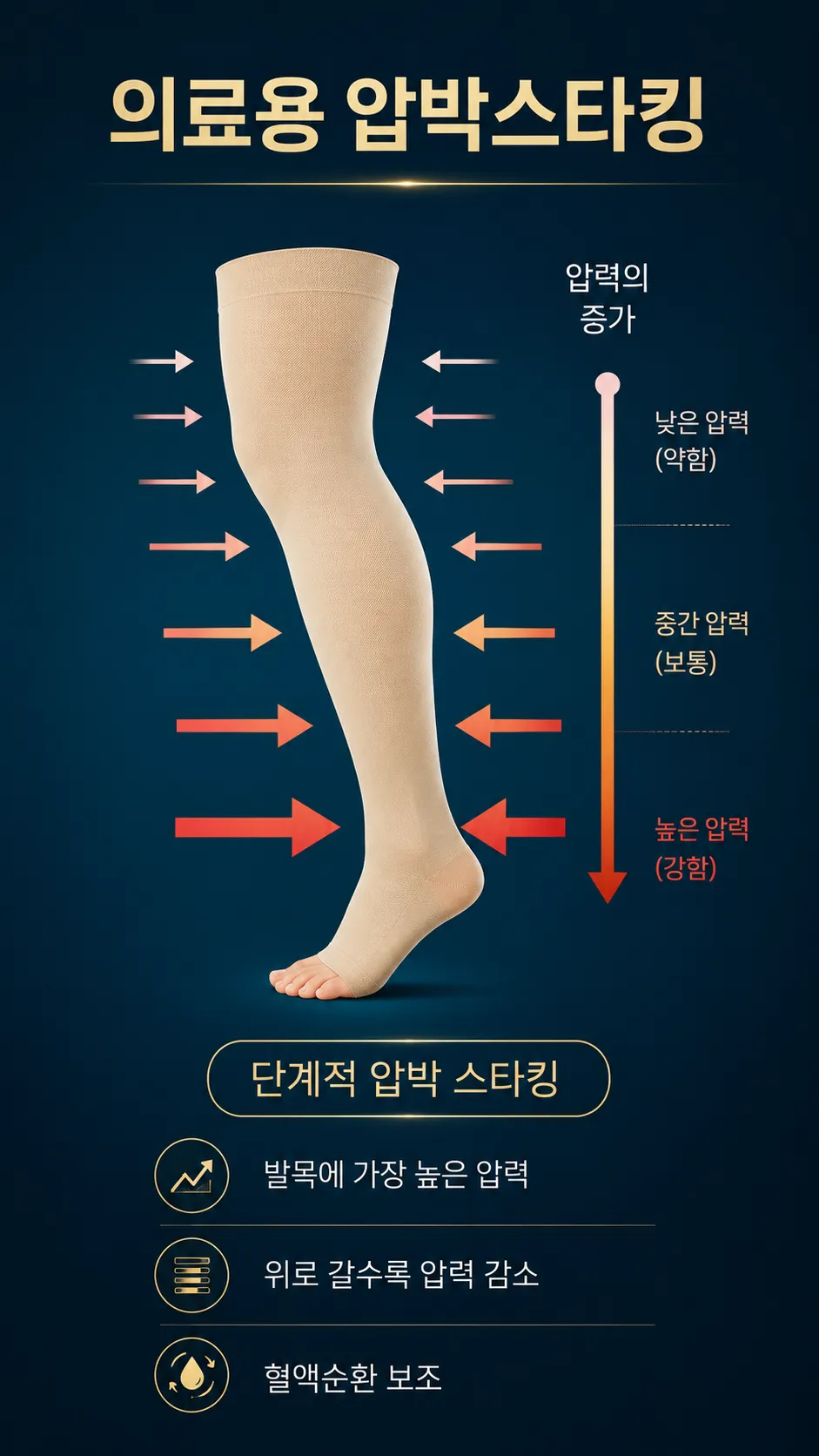
Medical compression stockings are strongest at the ankle, with the pressure easing as they rise over the calf and thigh.
This reduces the pooling of blood and fluid in the lower leg and supports the upward flow of venous blood.
The location and diameter of the refluxing vein, the severity of symptoms and any skin change are considered together in setting the direction of treatment.
Compression stockings do not remove venous reflux. They are a conservative measure that helps ease symptoms
02
How they differ from ordinary compression bands
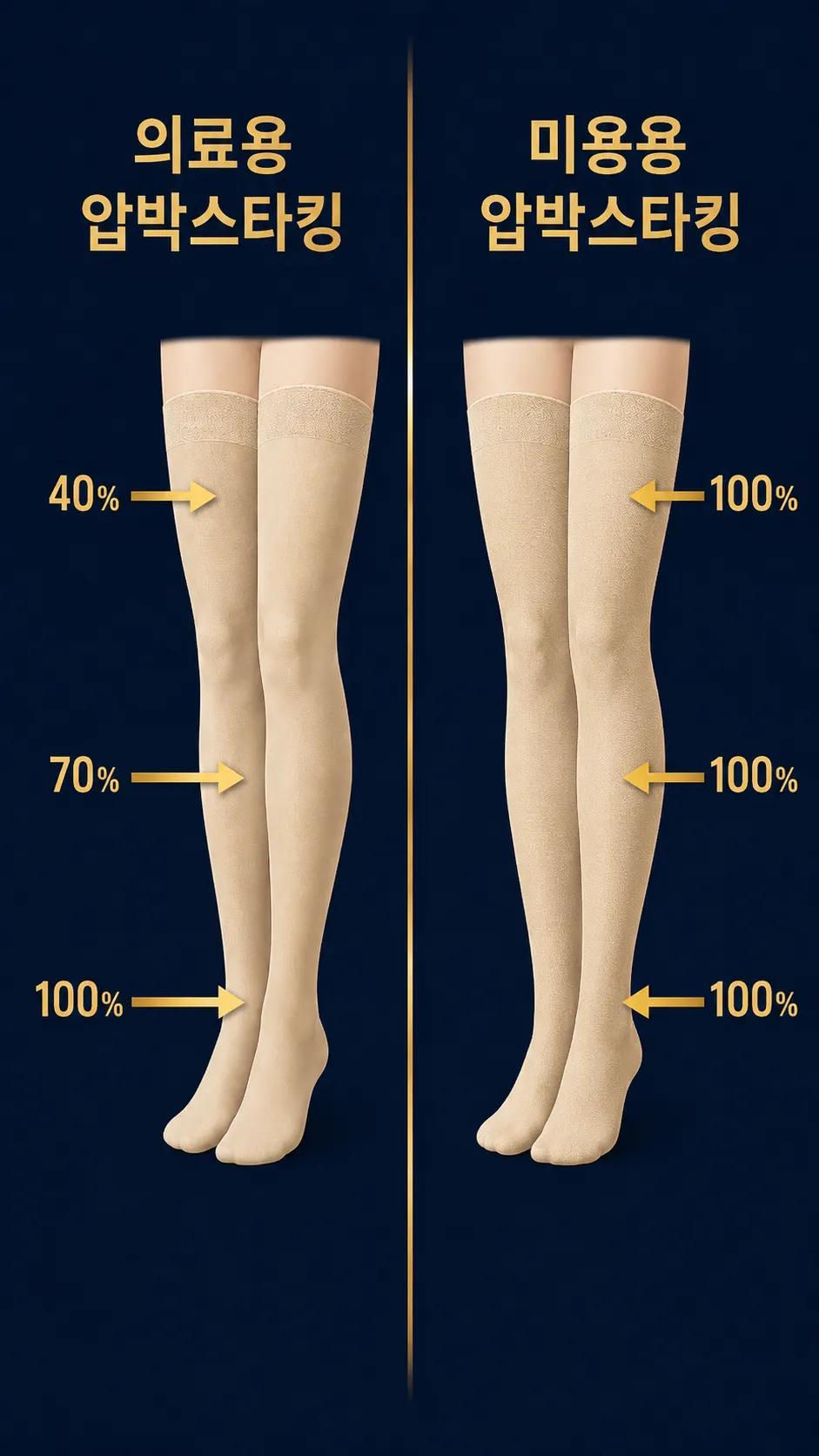
Ordinary compression bands are usually designed to tighten one particular area.
Medical compression stockings, by contrast, are designed so the pressure changes gradually from the ankle up toward the thigh.
If the compression is too strong or the size wrong, they can cause discomfort, skin irritation or numbness, so choosing the pressure and size that suit your own legs matters more than tightness.
Choosing the pressure and size that suit your legs matters more than tighter compression
03
TYPE GUIDE
For early to moderate varicose veins, 20–30 mmHg is generally effective; where there are skin changes such as eczema or ulcers, higher pressure may be needed
Stockings can be worn again after washing, but they lose elasticity after about six months and the compression weakens, so replacing them is advisable
Compression stockings do not remove venous reflux. They are a conservative measure that helps ease symptoms
Conservative care
They can be used as support, depending on symptoms, daily routine and the state of the veins
01
Legs that swell and feel heavy by the afternoon
02
Jobs that involve long periods of standing or sitting
03
Temporary leg swelling or vein dilation during pregnancy
When they are used
01
They can be used as support when symptoms are present
02
They may be advised to ease symptoms and manage progression
03
They can help, depending on the patient’s condition
04
You may be advised to wear them for a period to support venous circulation
When more is needed
If symptoms keep returning despite wearing them, the state of the veins should be checked
When swelling, pain or heaviness keeps returning despite wearing them
When veins bulge and look knotted
When pigmentation, itching, eczema or heat around the ankle is present
When duplex ultrasound confirms reflux in a main vein
When pain in the veins is present
Compression stockings are not enough for every case of varicose veins
Wearing guide
01
The wrong fit can mean too little effect, or discomfort, skin irritation and numbness
02
Putting them on in the morning, before the legs swell, generally helps.
They are best not worn while sleeping
03
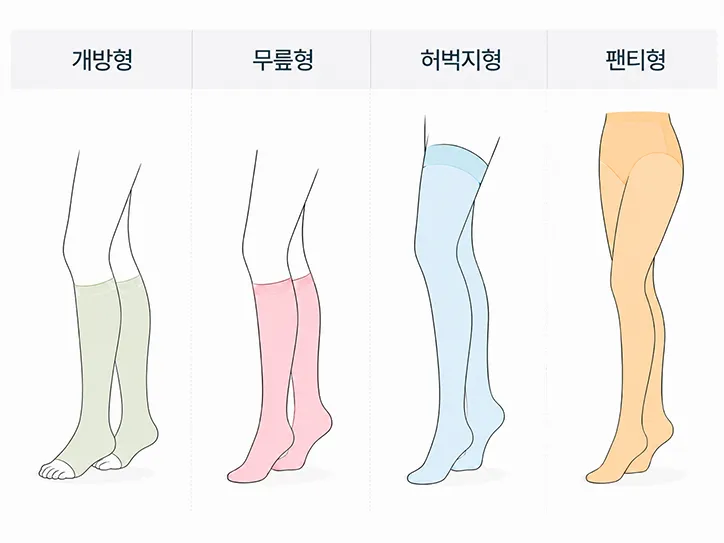
Knee-high, thigh-high and pantyhose cover different areas, and the right one depends on your condition
With arterial disease, severe skin conditions, open wounds or reduced sensation, it is better to check at a consultation than to start wearing them on your own
Our approach at Bluesky Phlebology
At Bluesky Phlebology, compression stockings are not treated as a simple matter of picking a product.
Swelling and heaviness in the legs may come from varicose veins, from lymphatic circulation, or from arterial disease or another circulatory problem, and these need to be looked at together.
We confirm the site and extent of venous reflux with high-resolution duplex ultrasound, then explain whether compression stockings suit you or another treatment should be considered.
as a university hospital professor
of vascular surgery experience
duplex ultrasound · care built on explanation
FAQ
They can help ease swelling, heaviness and fatigue, but they do not remove the reflux itself. If symptoms keep returning or ultrasound confirms reflux, further assessment may be needed.
Yes. Ordinary bands are usually meant to tighten one area, while medical compression stockings are designed so the pressure changes from the ankle upwards.
No. If the compression strength or size is wrong, they may do little or cause discomfort. Leg circumference, symptoms and the state of the veins should all guide the choice.
They are generally easiest to put on in the morning, before the legs have swollen. How long and how often to wear them depends on your symptoms, daily routine and whether you are being treated.
Book a visit
From checking symptoms to treatment, Bluesky Phlebology is with you
Ultrasound results the same day · same-day consultation available
Weekdays 09:00–12:30, 13:30–18:00 | Wed & Sat 09:00–13:00 | Closed Sun & holidays