

EN
Arterial Disease · Peripheral Artery Disease

Peripheral Artery Disease

Poor circulation in the legs
CHECK · If these symptoms keep returning
If your calves or thighs hurt when you walk
and ease after a short rest, again and again,
it may be a problem with arterial blood flow.
Intermittent claudication
Atherosclerosis · reduced blood flow
Integrated vascular surgery care
Scroll

Not every painful leg is varicose veins.
Arteries and veins must be told apart, starting with the direction of flow.

01
How is it different from varicose veins?

The problem lies in vessels running the opposite way.

Both conditions cause leg discomfort, but the vessels involved and the direction of flow are opposite. That is also why symptoms alone rarely settle the question.

Varicose veins
Leg → heart (veins)
As the vein valves weaken, blood flows backward down the leg. Swelling, heaviness, bulging veins and night cramps can appear.

What are varicose veins? →
VS
Peripheral Artery Disease
Heart → leg (arteries)
The arteries carrying blood down to the legs narrow or block, and the supply falls short. Pain on walking, cold feet and changes in skin colour can appear.
02
Warning signs

If these symptoms keep returning, have the arterial flow checked.

These symptoms can overlap with spinal, nerve, muscle and venous problems, so they are hard to judge on symptoms alone.
01
It hurts when you walk and eases when you rest
Pain or cramping in the calves, thighs or buttocks comes on while walking, and after a short rest you can walk again — a pattern that repeats.
Intermittent claudication
02
Cold, chilly feet
When blood supply drops, the feet or toes can feel cold. There may be a clear temperature difference between the two feet.
03
Changes in foot colour
Areas with poor flow can turn pale or bluish. Repeated colour changes in the toes or the top of the foot should be checked.
04
Wounds that will not heal
A small wound that lingers or an ulcer around the toes may be caused by poor blood flow. With diabetes, closer checking is needed.
05
Leg pain even at rest
In advanced disease, pain can occur without walking. It may ease slightly when the foot is lowered.
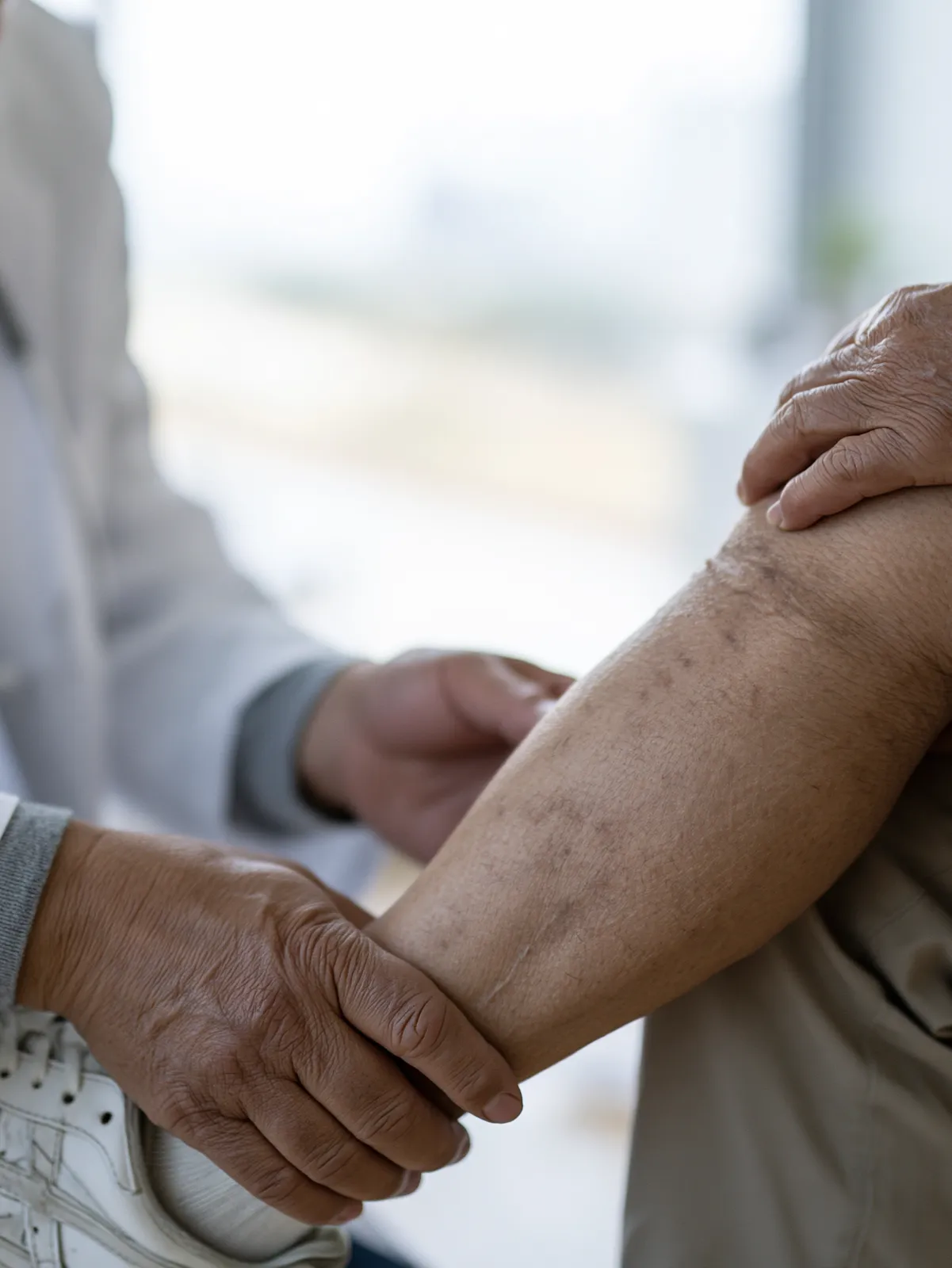
Checking symptoms of poor circulation in the legs from peripheral artery disease
Checking symptom patterns and blood flow together
Atherosclerosis is not just a problem of the leg vessels.
It is a reason to look at heart and brain vessel risk factors too.
03
Causes and risk factors

The main cause is atherosclerosis.

Cholesterol, fatty material and calcium build up inside the vessel, making it narrow and stiff. The following factors can raise the risk of peripheral artery disease.

Smoking
Diabetes
High blood pressure
High cholesterol
Obesity
Lack of exercise
Older age
Chronic kidney disease
History of heart or stroke disease

In particular, smoking and diabetes are risk factors strongly linked to peripheral artery disease. If leg symptoms are also present, the vessels deserve a closer look.

04
Tests and diagnosis

We check blood flow rather than deciding on symptoms alone.

After reviewing symptoms, medical history, lifestyle and underlying conditions, the tests needed are considered step by step.

Bluesky Phlebology treatment criteria & principles →
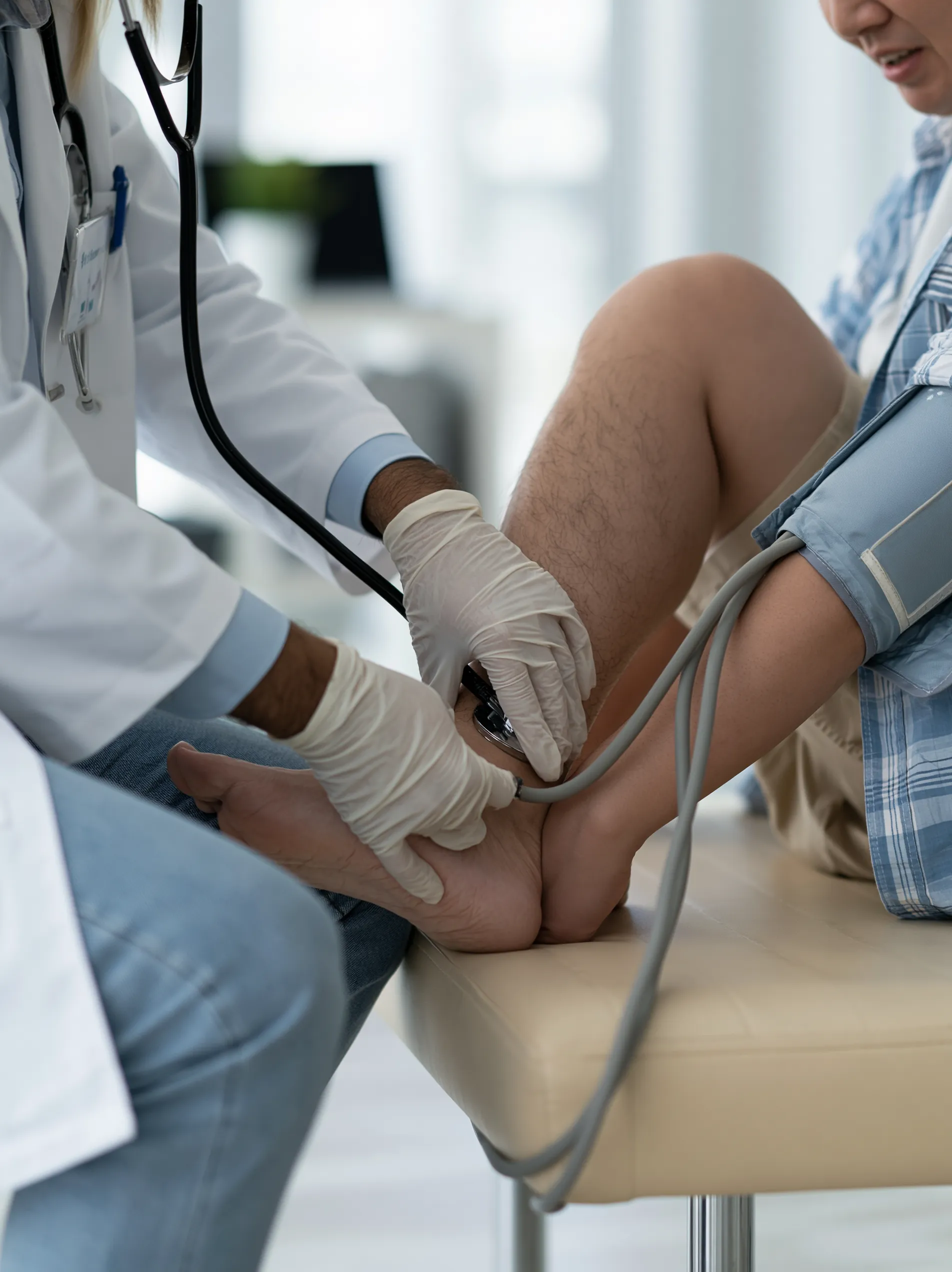
Ankle-brachial index (ABI) blood flow test for peripheral artery disease
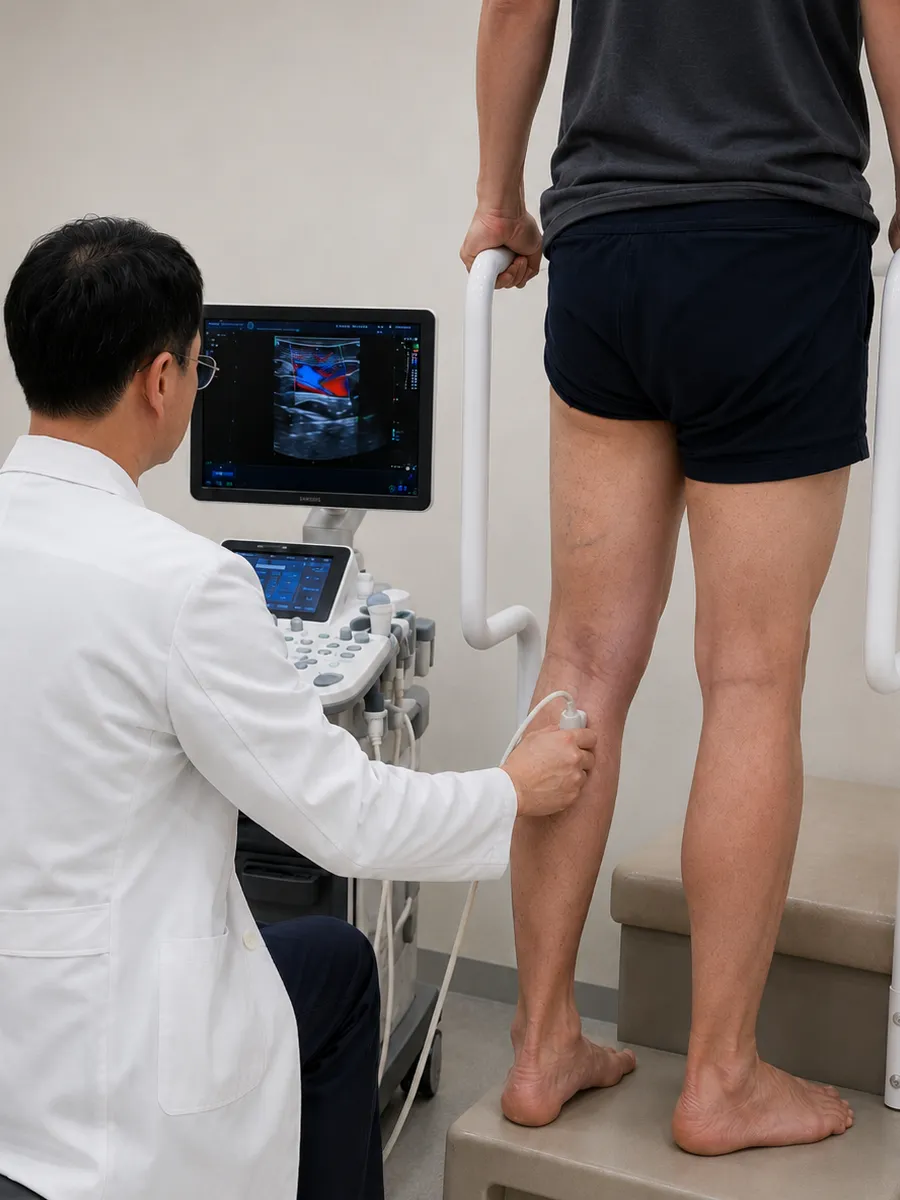
Checking arterial flow with duplex ultrasound
01
Consultation and history
We ask when the pain began, how far you can walk before it starts, and whether it eases with rest. High blood pressure, diabetes, smoking and any heart disease are reviewed as well.
02
Ankle-brachial index (ABI)
Blood pressure at the arm and ankle is compared to see whether enough blood reaches the legs. It is a relatively simple way to screen for reduced arterial flow.
03
Duplex ultrasound
Flow through the vessels, the site of any narrowing and flow velocity are checked. It examines the vessels without incisions and also helps distinguish venous from arterial disease.
04
Referral for advanced imaging if needed
If narrowing or blockage is suspected, CT angiography or MRI may be needed. The next step depends on the symptoms and the results of the initial tests.
05
Treatment and management

The approach depends on
the vessels and how severe the symptoms are.

The same treatment does not apply to every patient. What matters is setting a direction that fits the current condition, based on ultrasound and flow testing.

🚶
Lifestyle
Stopping smoking is essential, and walking exercise can help. If pain is severe or there is a wound, however, blood flow should be checked first.
📋
Managing underlying conditions
Diabetes, high blood pressure and high cholesterol are closely tied to the progression of arterial disease. Controlling blood sugar, blood pressure and cholesterol matters for the whole circulation, not only the legs.
💊
Medication
Depending on the patient, drugs that reduce clot formation, lower cholesterol or help improve blood flow may be considered, taking general health and current medication into account.
🏥
Endovascular treatment / surgery
When a vessel is badly narrowed or blocked and symptoms are marked, balloon angioplasty, stenting or bypass surgery may be needed. Not every patient needs them.
06
When to be careful

Do not dismiss these
as simple tiredness.

Arterial disease is not only a problem of the leg vessels; it can be linked to atherosclerosis throughout the body. Consider a visit if you notice the following.

One leg suddenly turns cold and pale
Pain in the foot or toes is getting worse
The toes turn dark red or bluish
A wound on the foot will not heal
You have diabetes and a foot wound or loss of sensation
Leg pain continues even at rest
What matters is not labelling a condition,
but carefully telling apart the pattern of symptoms and the flow in the vessels.
07
Our approach at Bluesky Phlebology

We look from both directions — veins and arteries.

Leg pain, swelling, numbness and heaviness can occur with varicose veins, but they can look similar in arterial disease or in nerve and musculoskeletal problems. The clinic is in Oncheonjang, Dongnae-gu, Busan, and is reached easily from Dongnae-gu and Geumjeong-gu as well as Yangsan, Gimhae and the wider Gyeongnam region. If long-term intravenous treatment is needed, see our PICC page as well.
3,000+
of vascular surgery experience
30 years
as a university hospital professor
1
One specialist throughout
Duplex ultrasound and flow assessment to tell arterial from venous problems
The pattern of leg symptoms examined without jumping to conclusions
Referral for advanced tests and guidance on treatment when needed
Diabetes, blood pressure and other conditions considered with the vessels
Attention to small symptoms and subtle changes in the vessels
Dr. Bang Jeong-hee, vascular surgeon for peripheral artery disease at Bluesky Phlebology
Dr. Bang Jeong-hee
Vascular surgeon · MD, PhD · Former university hospital professor
08
FAQ

Peripheral artery disease — frequently asked questions

If my legs are numb and painful, is it varicose veins?
+
Not necessarily. Leg numbness and pain can come from varicose veins, but also from peripheral artery disease, a herniated disc, spinal stenosis, peripheral neuropathy or muscle problems. If pain on walking that eases with rest keeps returning, arterial disease should be considered too.
What symptoms are typical of peripheral artery disease?
+
Typically, the calves or thighs hurt after walking a certain distance, and after a short rest you can walk again. This is called intermittent claudication. Cold feet, changes in skin colour and foot wounds that heal poorly can also occur.
Can varicose veins and peripheral artery disease be checked together?
+
Depending on symptoms, veins and arteries can be assessed together. For varicose veins we look for venous reflux; for peripheral artery disease, for reduced arterial flow. Leg discomfort may have more than one cause, so a vascular surgery assessment helps tell them apart.
Does peripheral artery disease always need surgery?
+
No. Not every case needs a procedure or surgery. In mild or early disease, stopping smoking, exercise, managing underlying conditions and medication may come first. If a vessel is badly narrowed, or there are wounds, ulcers or pain at rest, further treatment may be needed.
Can cold feet be a vascular problem?
+
It can. Cold feet can relate to many factors, including the autonomic nerves, peripheral nerves, thyroid function, anaemia and lifestyle. But if only one foot is noticeably cold, or there is a colour change with pain, the vessels should be checked.
Why is more care needed with diabetes?
+
Diabetes can affect both vessels and nerves. When sensation in the feet is dulled, wounds may be noticed late, and poor blood flow can slow healing. People with diabetes who notice a foot wound, colour change, pain or loss of sensation should be checked early.
Book a Visit

Leg pain —
is it the veins or the arteries?
It needs to be told apart.

If your legs ache, feel numb or hurt when you walk again and again, it is hard to put down to tiredness or age alone. At Bluesky Phlebology we examine the flow in your leg vessels closely from a vascular surgery perspective.

Book a visit