

A dialysis access matters beyond the moment it is made —
we design it carefully from the start so that it lasts.
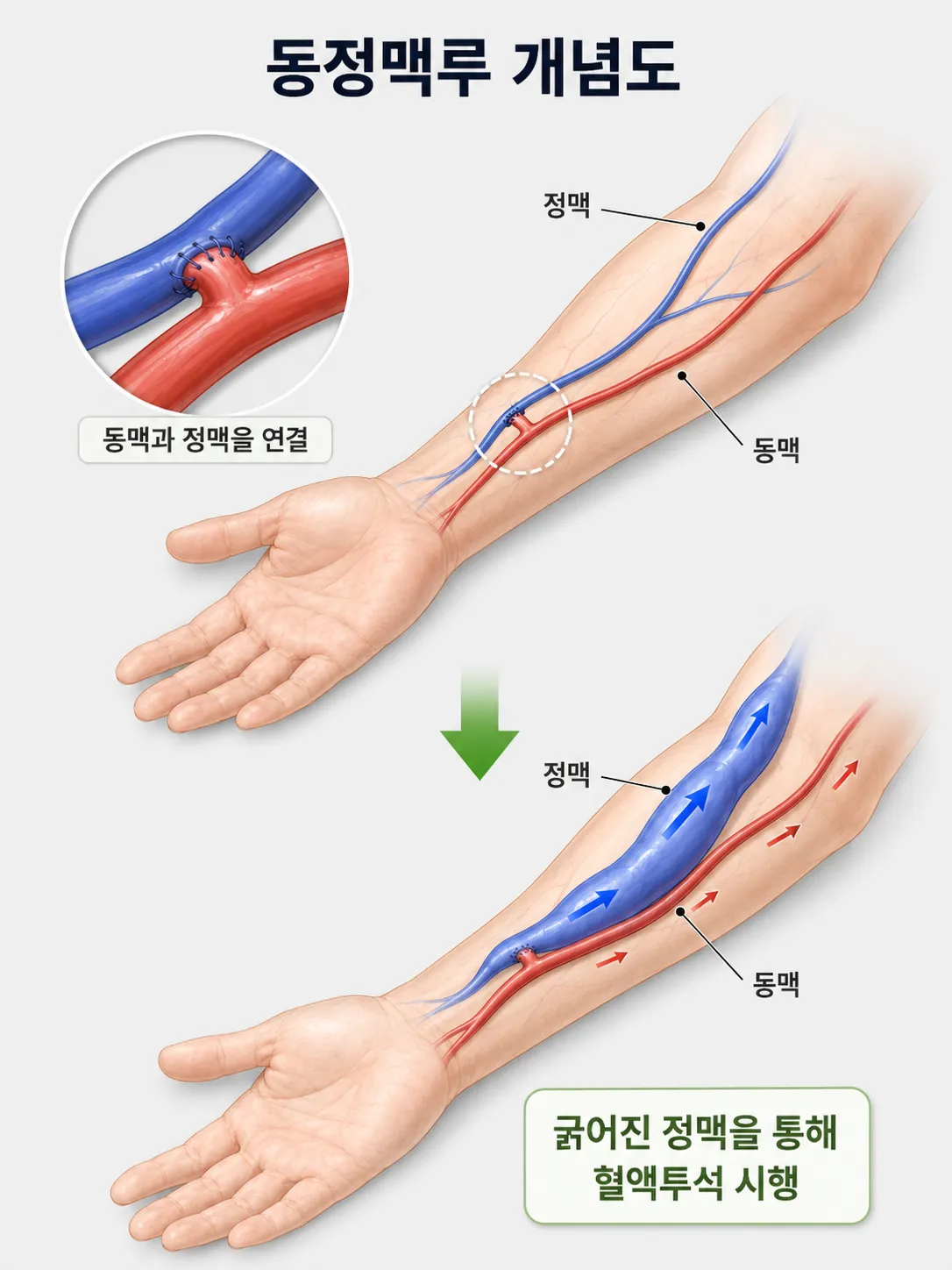
An arteriovenous fistula joins an artery to a vein to create a vessel that can be used for haemodialysis.
We assess the calibre, position and flow of the vessels before deciding on the right approach for each patient.
In haemodialysis, blood is drawn out of the body, passed through a dialyser and returned. An ordinary vein alone cannot provide the flow needed for repeated dialysis.
Connecting the high-pressure flow of an artery to a vein makes the vein enlarge and strengthen. The resulting access is called an arteriovenous fistula, and it becomes an essential vascular access for patients preparing for haemodialysis.
Rather than declaring one method better, the decision weighs the current state of the vessels, the dialysis schedule and the patient's overall health.
A fistula is not simply a matter of joining an artery to a vein. We consider which vessels to use, whether their calibre is sufficient, whether blood can flow well, and whether the site will allow dialysis needles to be inserted repeatedly after surgery.
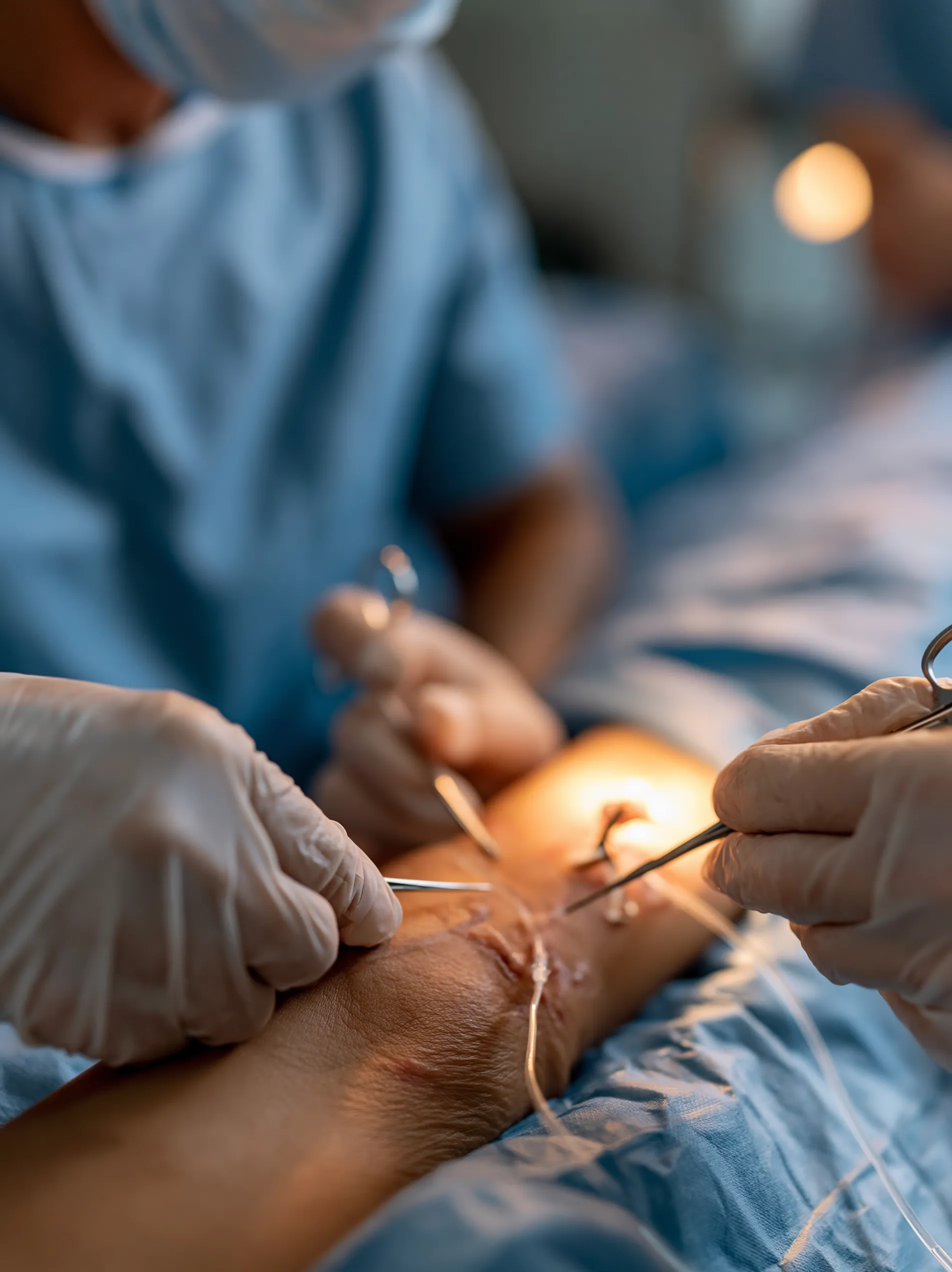
Even a well-made fistula can develop narrowing, thrombosis, infection or bleeding if it is not looked after. Make a habit of lightly touching the fistula every day to check that you can feel the buzzing thrill.
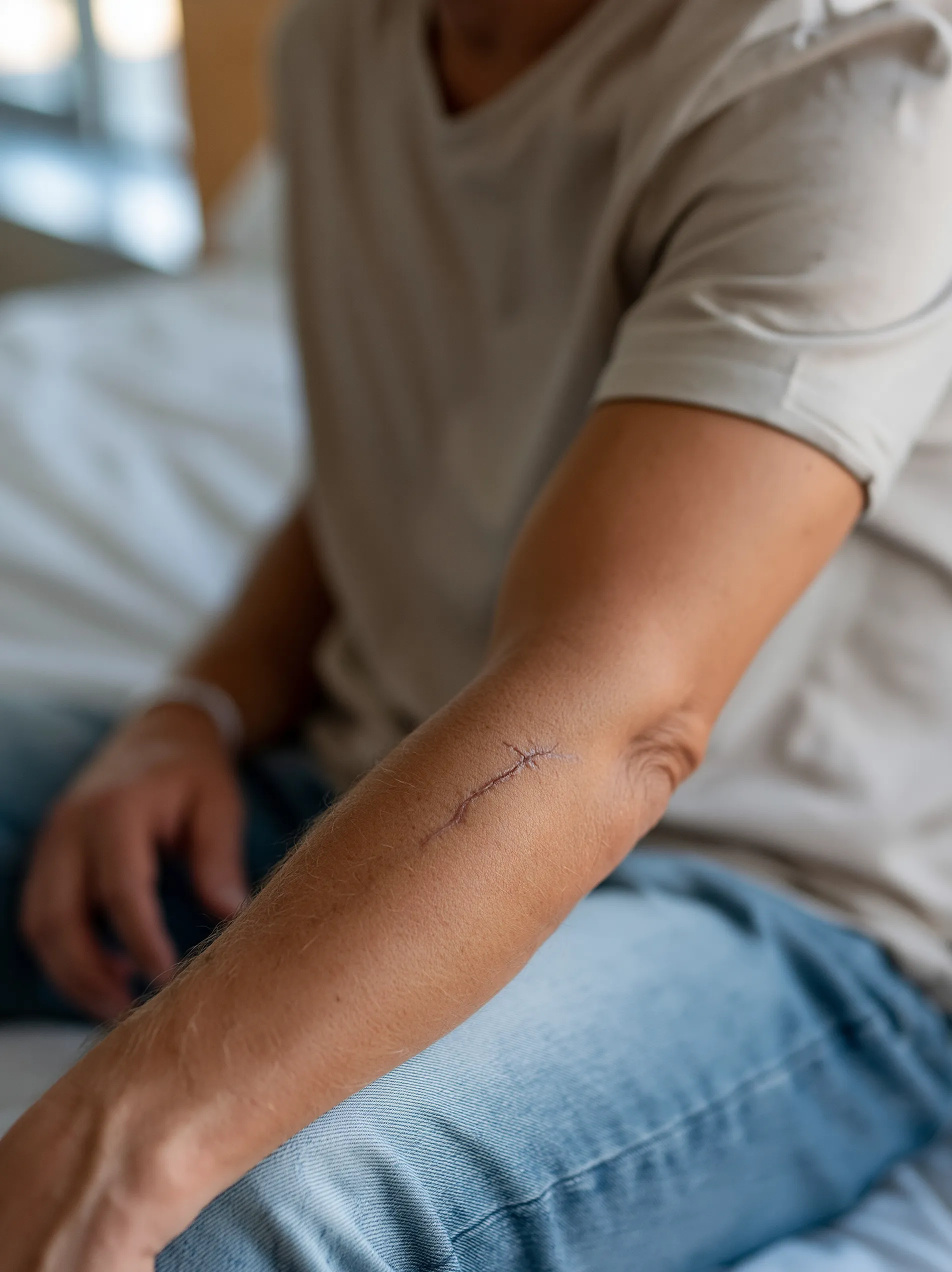
It is important to notice changes before a fistula blocks or narrows. If any of the following occur, have the vessel checked.
The vessel used for dialysis affects a patient's life and treatment for a long time, so careful judgement is needed from the very first design. We explain clearly whether your own vessels can be used, whether a graft is needed, and what to watch for in care after surgery.

Fistula surgery is not simply joining vessels; it prepares the right access with both the patient's vessels and dialysis plan in mind. Bluesky Phlebology looks closely at small symptoms and subtle changes in flow, and explains the vascular care each patient needs.
Book a visit