Legs feel swollen and heavy by afternoon
A heavy feeling keeps coming back after long periods of standing or sitting.



For 30 years at a university hospital, I personally took on complex vascular surgeries that had no set answers, one case at a time.
I distilled that experience into surgical methods and clinical criteria, and passed them on to younger doctors.
Now I care for varicose vein patients at Bluesky Phlebology, a vein clinic in Oncheonjang, Dongnae-gu, Busan — closer to home.
Our Standard
Your children's education.
Your parents' hospital bills.
Choices where family always came before you.
Those choices were not wrong.
But varicose veins don't get better just by putting up with them.
Putting it off without knowing your current condition can mean missing the right time for treatment.
This doesn't mean you have to decide on treatment today.
The first step is an objective look at what stage you're in right now.
Doctor's Note
In treating vein disease, knowing which veins to leave alone matters as much as knowing which to treat. It isn't only about the veins you can see — blood flow, the cause of your symptoms, and your everyday life after recovery all have to be considered together.
“Knowing when surgery is truly needed matters more than being good at surgery.”
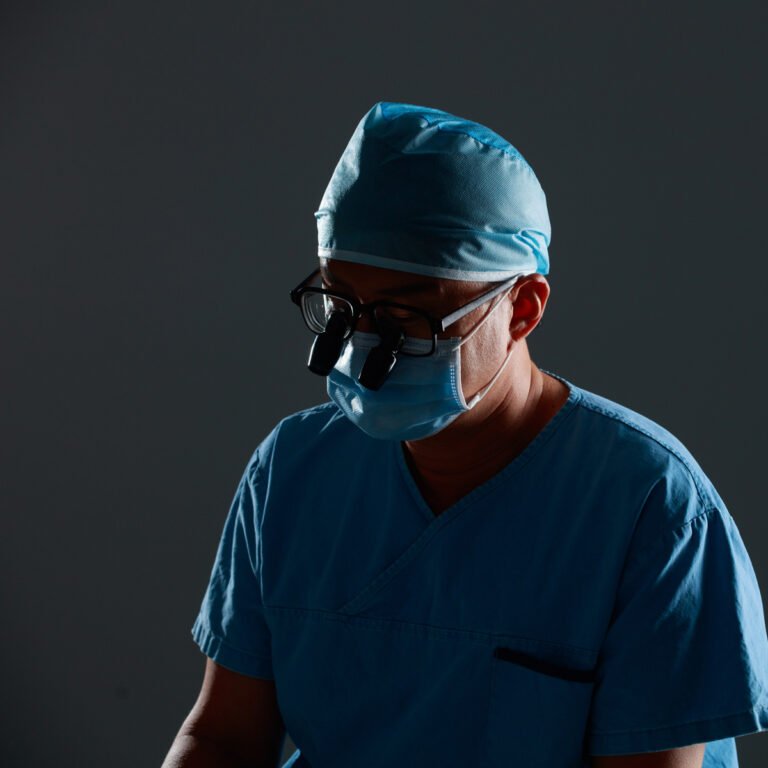
What those years held
Taking on complex vascular surgery, and beginning the work of refining clinical standards.
Going beyond treatment itself to research and apply standard guidelines for vascular surgery.
Established clinical criteria to distinguish patients who need treatment from those for whom monitoring is enough.
The standards of care refined at a university hospital, now with easier access and a more comfortable clinic setting.
More important than any number
is the reassurance our patients feel.
When to Visit
A heavy feeling keeps coming back after long periods of standing or sitting.
You sometimes wake up with calf cramps or numbness.
Small blue or purple veins appear behind the ankle or knee or on the inner thigh, and seem to grow and spread over time.
Around the back of the ankle and the calf, the skin becomes dry, itchy, or hardened, and brownish patches appear and gradually spread.
Care System
We review where you feel discomfort, when your symptoms get worse, and your work and exercise habits.
We identify where venous reflux occurs and how far it extends, to pinpoint the veins that actually need treatment.
We explain the options that fit your case, such as conservative care, sclerotherapy (injection treatment), and laser or radiofrequency treatment.
Self-Check
Take a quick check.
More people miss the early signs than you might think.

Decision
but to know exactly where your condition stands.
No overtreatment —
we recommend only the care you truly need.
Guide
The essentials to know first about vascular conditions, organized by topic.
How weakened vein valves and blood reflux lead to varicose veins.
Read in Korean → 02How we decide whether and how to treat, based on ultrasound findings and symptoms.
Read in Korean → 03Leg pain while walking that eases with rest, and problems with arterial blood flow in the legs.
Read in Korean → 04Creating and caring for the arteriovenous fistula needed for hemodialysis, and the warning signs to watch for.
Read in Korean →FAQ
The questions we hear most often before a first visit.
Not necessarily. Depending on how far the condition has progressed and your current symptoms, management alone may be enough in some cases, while treatment should be considered in others.
What matters is not deciding simply because veins are visible, but first understanding your current condition accurately.
It's possible.
However, leg swelling and fatigue can also be linked to long hours of standing or sitting, weight changes, or reduced circulation. If the symptoms keep recurring, it's better to have your condition checked rather than writing it off as ordinary fatigue.
Treatment isn't always necessary.
But visible changes can mean the condition had already been progressing before it showed on the surface. It helps to check, without pressure, whether you're at a mild stage or need a closer look.
Mild symptoms aren't always a reason to feel reassured. In the early stages, the condition often shows up as everyday discomfort — swelling, heaviness, fatigue, or cramps at night — rather than pain. You don't need to decide on treatment right away, but it's a good idea to know where your condition stands.
In some cases, yes. If it's early or your symptoms are mild, adjusting daily habits, managing your weight, staying more active, and changing how you use your legs can help. But whether management alone is enough, or a closer look is needed, differs from person to person.
Your treatment direction is decided by considering the current state of blood flow in your legs, any accompanying conditions, and your clinical symptoms.
They can. It varies from person to person, but symptoms often progress gradually depending on daily habits, the nature of your work, family history, and weight changes. So even if the discomfort isn't significant, it's important to know what stage you're at.
It's enough to come with the aim of checking your condition, rather than feeling pressured to decide on treatment. A specialist will explain where your condition stands, whether management is enough, and how any examination and treatment would proceed.