
EN
Surgical treatment
RADIOFREQUENCY ABLATION

Radiofrequency Ablation for Varicose Veins

We find the affected vein precisely and treat only the segment that needs it.
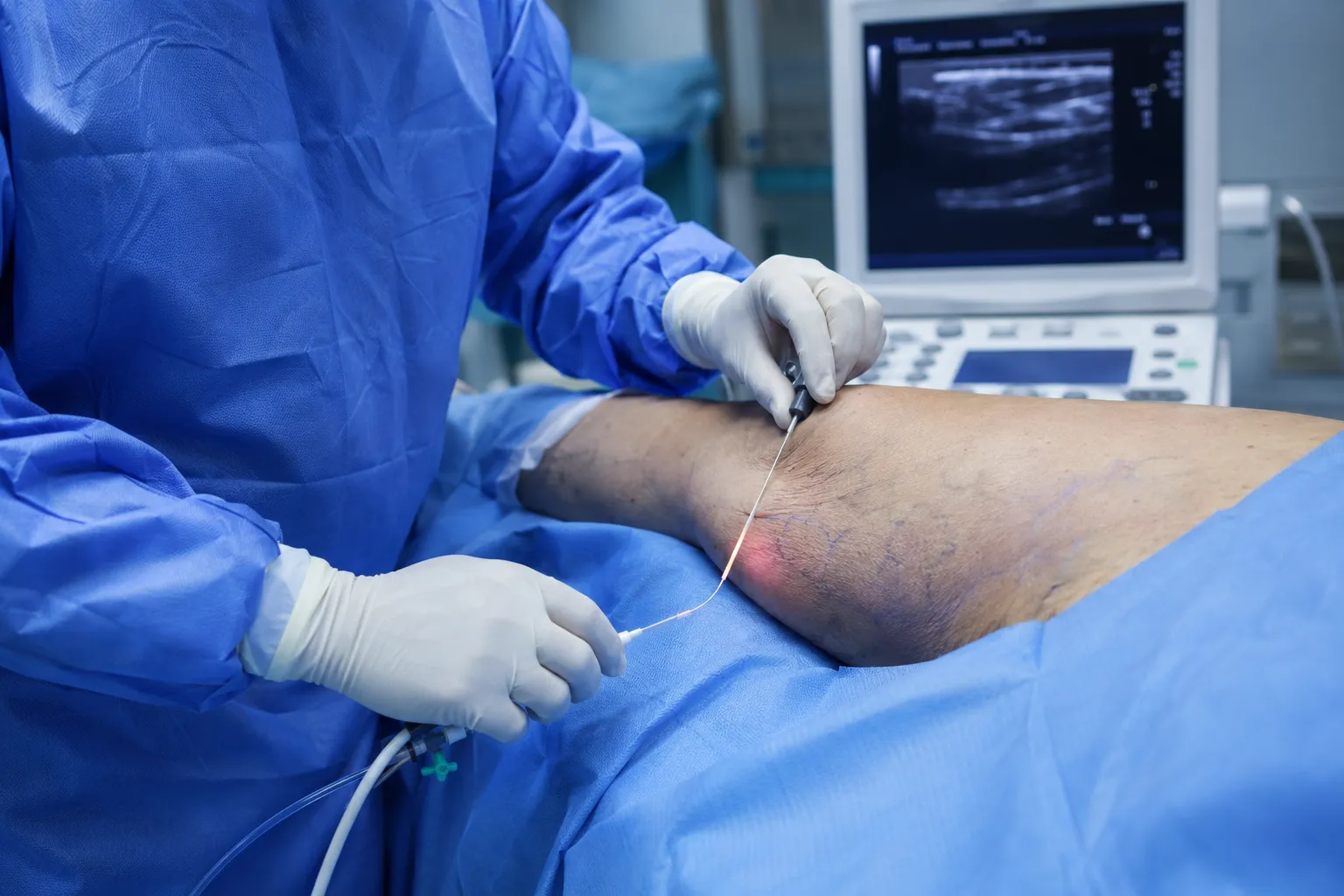
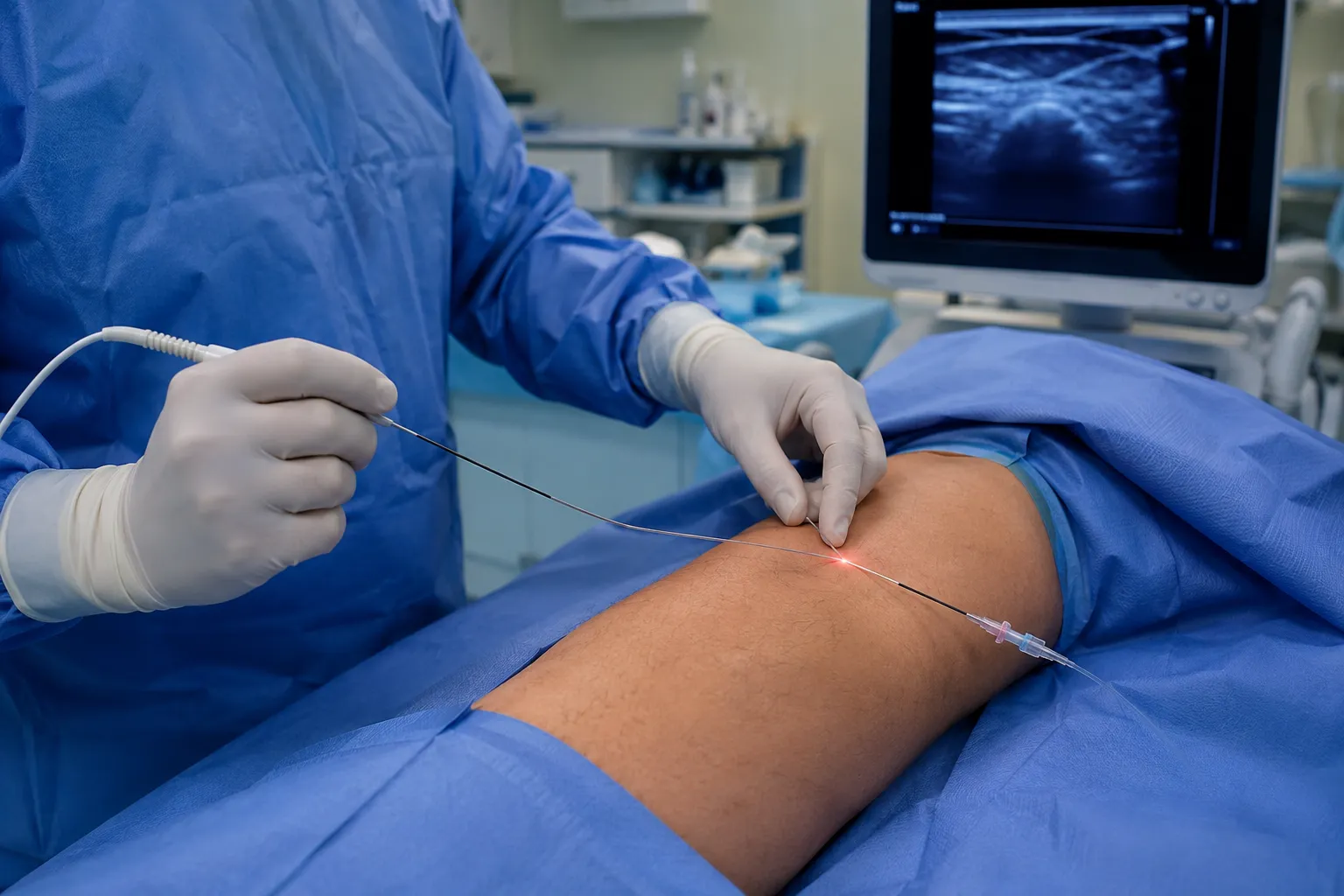
A thin catheter is placed inside the refluxing vein, and radiofrequency thermal energy closes the affected vein.
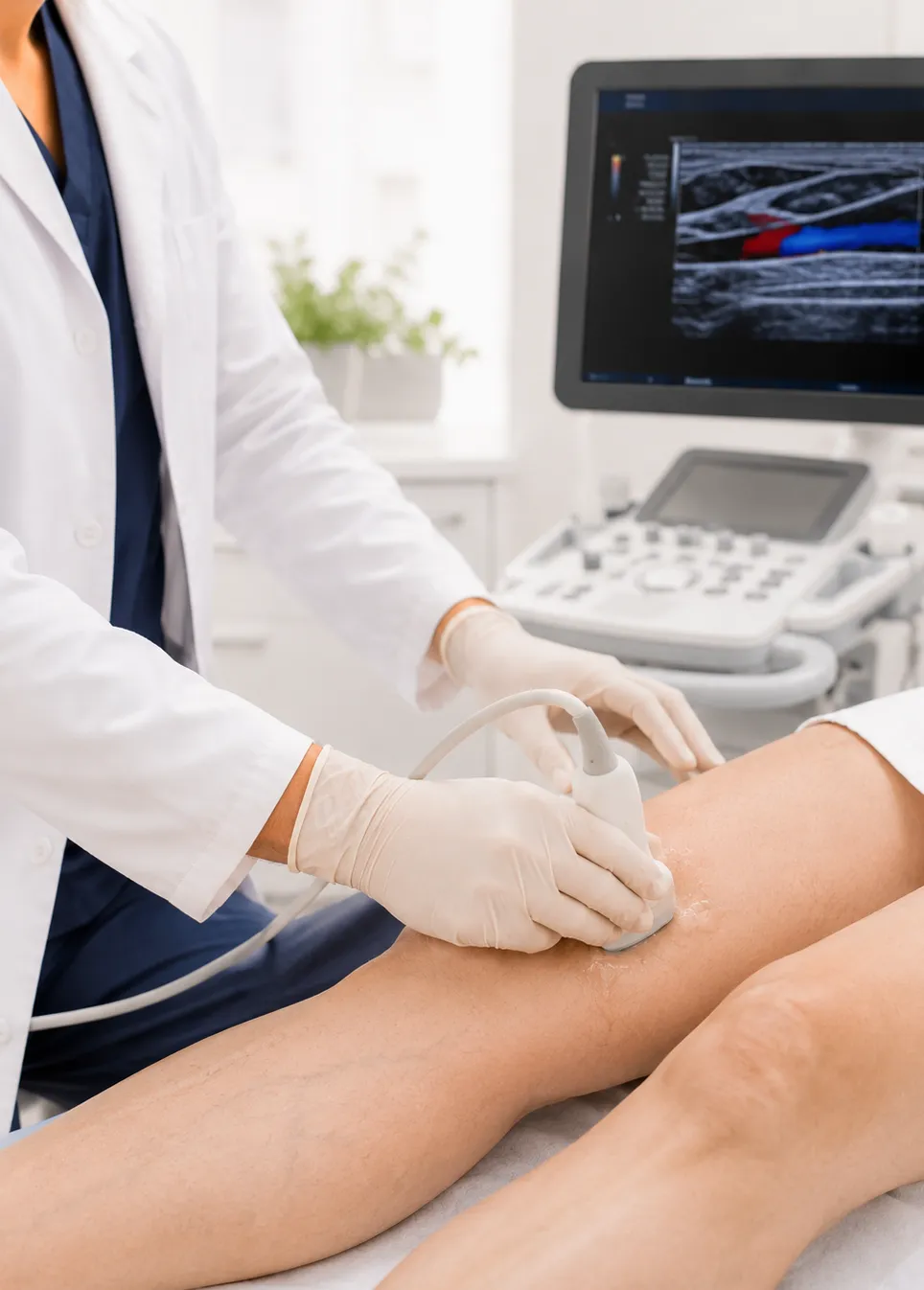
Before treatment, duplex ultrasound confirms the exact location and condition.

RADIOFREQUENCY WAVE
Move your cursor or touch the screen
01
What is radiofrequency ablation?

A treatment that closes a refluxing vein from the inside.

In varicose veins, the valves inside the leg veins weaken, so blood cannot travel up toward the heart and flows backwards instead.

Radiofrequency ablation places a thin catheter inside the affected vein and delivers thermal energy to contract and close the vein wall. It is not simply about closing a vein — the first step is determining exactly which vein needs to be closed.

Learn more about varicose veins →
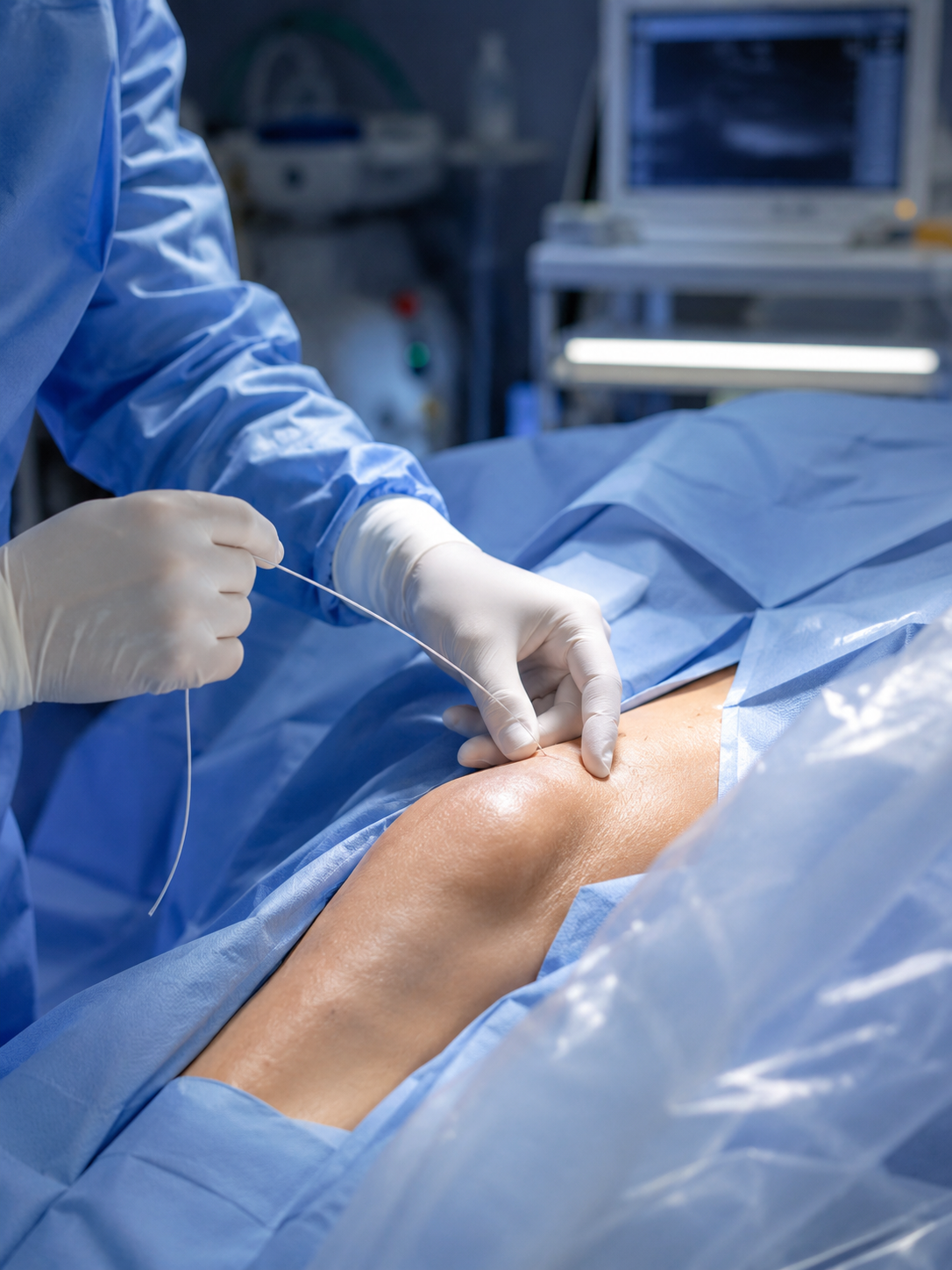
Thermal energy contracts and closes the vein wall
Steady radiofrequency energy is delivered from the catheter tip to contract the vein wall from within.
Precise treatment under ultrasound guidance
The catheter position is confirmed with real-time ultrasound throughout.
Catheter procedure for radiofrequency ablation of varicose veins
Catheter insertion under ultrasound guidance
Radiofrequency wave pattern for varicose vein treatment
More than the veins you can see,
the direction of flow inside matters
02
When radiofrequency ablation is needed

When it may be considered

The decision is made from symptoms and ultrasound findings together. Suspected varicose veins alone do not make radiofrequency ablation the answer.

Legs often feel heavy and swollen
Discomfort worsens when standing or sitting for long periods
Calf pain, tightness or night cramps keep returning
Veins stand out under the skin
Venous reflux is confirmed on duplex ultrasound
Compression stockings alone no longer control the symptoms
03
Why the examination matters

The flow inside matters more than the veins you can see.

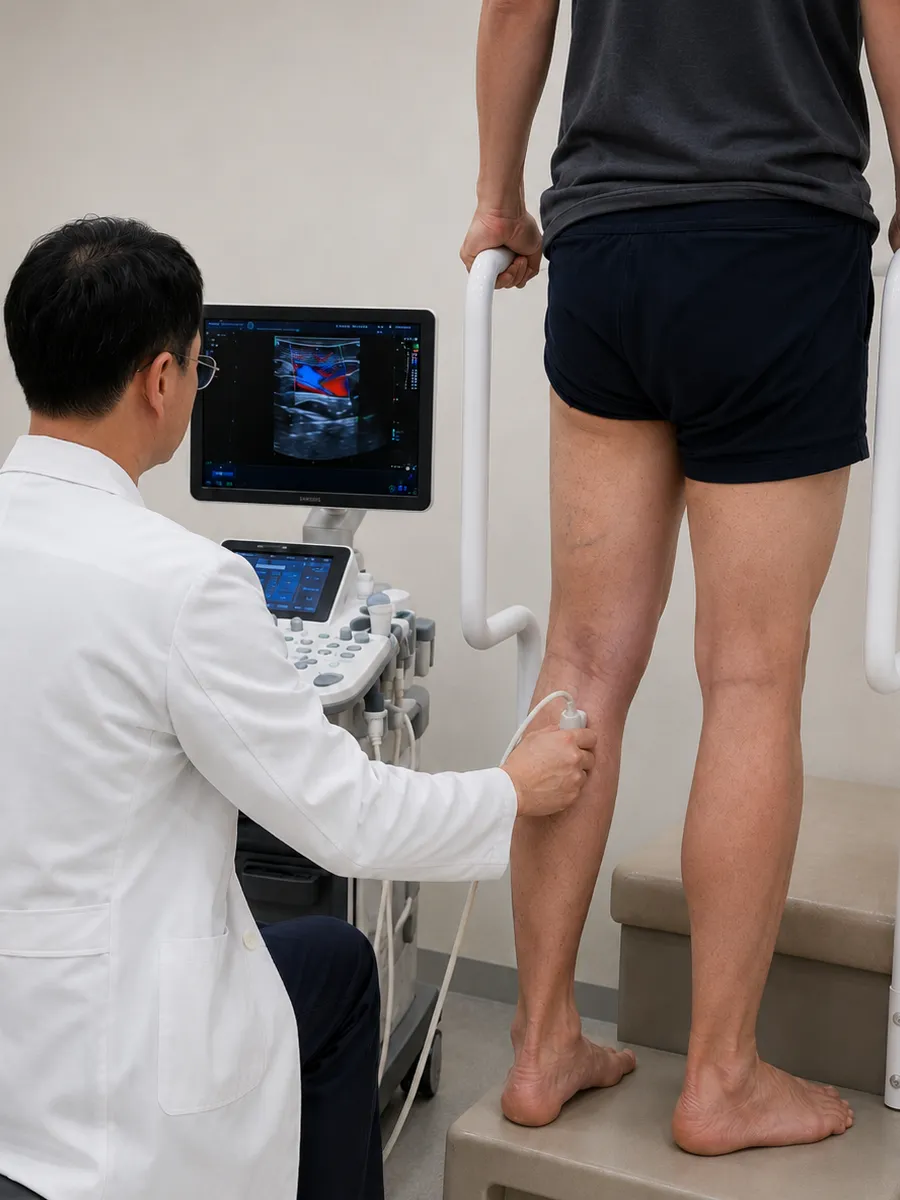
The key examination for radiofrequency ablation is duplex ultrasound. Deciding from bulging veins alone can miss where the reflux actually begins.
See our treatment criteria →

01
Location and extent of reflux
02
Vein diameter and depth
03
Distance between skin and vein
04
How tortuous the vein is
05
How the branch veins connect
06
Ruling out arterial disease
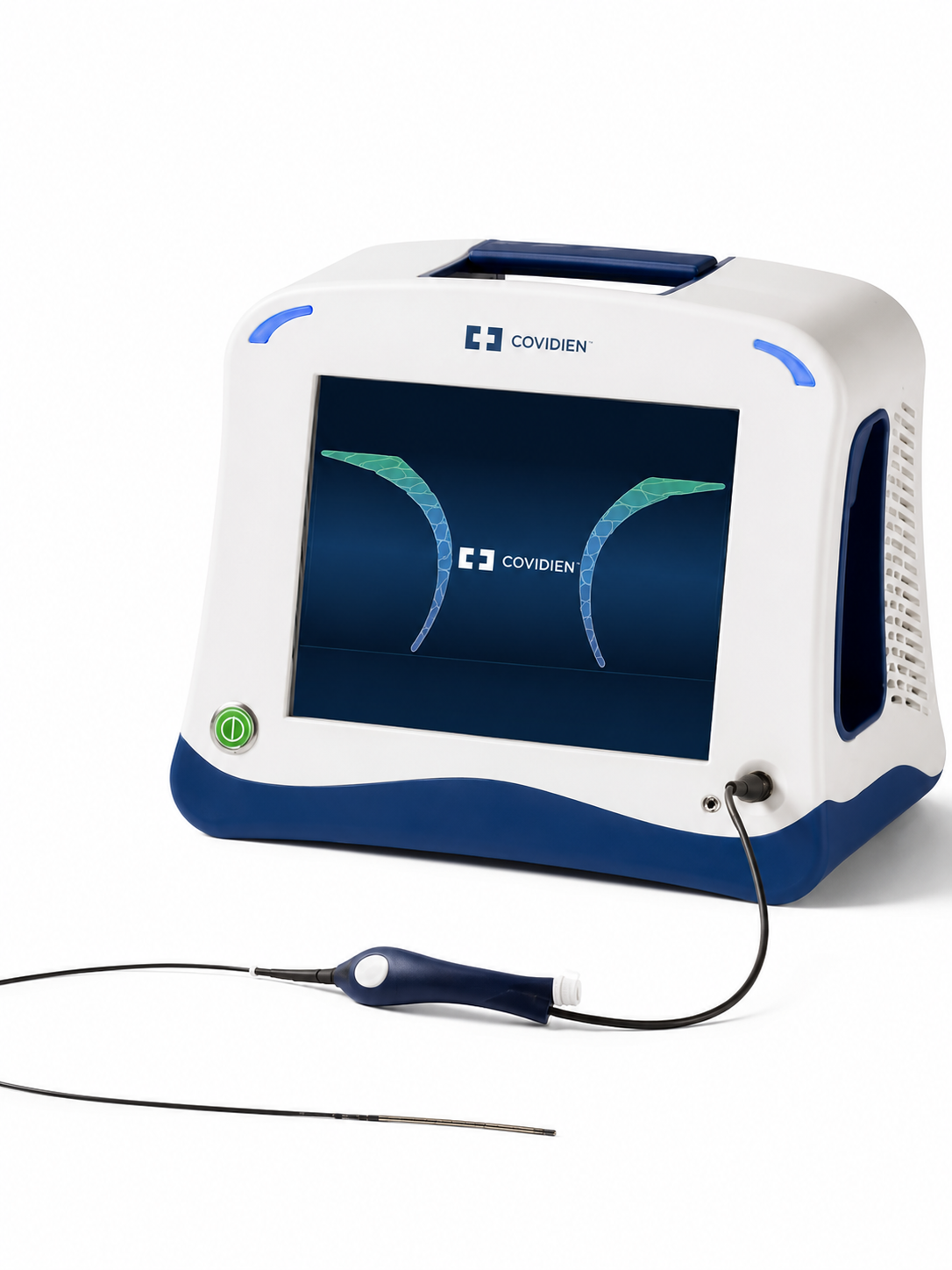
ClosureFast radiofrequency system for varicose vein treatment
Radiofrequency system (ClosureFast)
04
The treatment process

From examination to recovery guidance, step by step.

STEP 01
Duplex ultrasound
Confirm the location and degree of reflux, and identify the veins to treat alongside symptoms
STEP 02
Treatment plan
Explain the treatment range, considering vein location, diameter, shape and depth
STEP 03
Anesthesia and catheter insertion
Local or sedation anesthesia; the catheter is guided into the affected vein under ultrasound
STEP 04
Radiofrequency energy delivery
Controlled-temperature energy contracts and closes the vein wall
STEP 05
Recovery and precautions
Guidance on walking, compression stockings and follow-up ultrasound
Duplex ultrasound examination before radiofrequency ablation
Radiofrequency ablation procedure for varicose veins
Consultation about radiofrequency ablation for varicose veins
Before treatment,
an accurate diagnosis comes first
05
Features of radiofrequency ablation

Six key features of radiofrequency ablation for varicose veins

Radiofrequency ablation limits the extent of incisions and works from inside the vein. In many cases walking is possible after treatment.

01
Limited extent of incisions
02
Treatment performed from inside the vein
03
Catheter position checked in real time with ultrasound
04
Walking is often possible after treatment
05
Can be combined with other treatments
06
Recovery varies from person to person
06
After treatment

Recovery matters as much as the treatment itself.

After radiofrequency ablation, compression stockings may be worn for a period as advised. Bruising, tightness or changes in sensation can occur at the treated area, and in most cases these ease with time.

How to wear compression stockings →
01
Wearing compression stockings — Wearing for a set period is advised, depending on your condition and the extent of treatment
02
Light walking — Helps circulation; avoid strenuous exercise, saunas and alcohol
03
Watching your symptoms — See us if swelling, pain or a feeling of heat persists
04
Follow-up ultrasound — If symptoms change after treatment, duplex ultrasound is used to check
Walking during recovery after radiofrequency ablation
Light walking supports recovery
07
Comparing treatments

How radiofrequency ablation differs from other treatments

What matters more than the method is choosing what fits the vein. Each treatment differs in mechanism, strengths and the vein conditions it suits.

Treatment
Mechanism
Characteristics
Radiofrequency
Radiofrequency energy contracts and closes the vein wall
Controlled temperature, thermal treatment
Laser
Laser energy closes the vein
Thermal treatment, similar to radiofrequency
VenaSeal
Closes the vein with medical adhesive
No heat used, non-thermal
ClariVein
Mechanical stimulation plus an agent
Non-thermal, minimal anesthesia needed
Sclerotherapy
Closes the vein by injecting a sclerosant
Mainly for small branch and spider veins
08
Our approach at Bluesky Phlebology

We aim for vascular surgery care that does not miss small differences.

At Bluesky Phlebology we do not treat varicose veins as a problem of bulging veins alone. We look at heaviness, swelling and pain in the legs together with the subtle changes in reflux seen on duplex ultrasound.
3,000+
Vascular surgery experience
30years
University hospital professor
1doctor
Dedicated, focused care
Diagnosis based on duplex ultrasound
Symptoms and test results considered together
Explanations aimed at avoiding unnecessary treatment
Choosing appropriately between radiofrequency, non-thermal and conservative care
Attention to small symptoms and subtle changes
Dr. Bang Jeong-hee, radiofrequency ablation specialist at Bluesky Phlebology
Dr. Bang Jeong-hee
Vascular surgery specialist · MD, PhD · Former university hospital professor
09
Frequently asked questions

Radiofrequency ablation for varicose veins — frequently asked questions

Who needs radiofrequency ablation for varicose veins?
+
It can be considered when duplex ultrasound confirms reflux in a main vein and this is linked to symptoms such as heaviness, swelling, pain or night cramps. Not every case of varicose veins calls for radiofrequency ablation, so the decision follows the examination.
Can I walk right after radiofrequency ablation?
+
Walking is possible in many cases. Recovery can still differ with the extent of treatment, the type of anesthesia and the patient's condition, so it is best to follow the guidance you are given.
How does radiofrequency ablation differ from laser treatment?
+
Both close the vein with thermal energy. Radiofrequency delivers energy at a controlled temperature to the vein wall, while laser uses light energy. Both are thermal treatments that generate high heat, and radiofrequency runs considerably cooler than laser. Thermal treatments do involve some degree of discomfort during the procedure.
Can varicose veins come back after radiofrequency ablation?
+
Even when the treated vein stays closed, reflux can appear in other veins over time. If symptoms change after treatment, it is important to check again with duplex ultrasound.
If I can see veins, does that always mean I need radiofrequency ablation?
+
No. Even when veins are visible, if the reflux is mild or poorly linked to symptoms, monitoring or lifestyle management may come first. Conversely, veins that barely bulge can still need treatment when there is reflux in the deeper veins.
Visit information

If your leg symptoms keep returning,
the direction of the flow
is the first thing to check.

Radiofrequency ablation closes the affected vein, but what matters first is finding exactly which vein should be closed. At Bluesky Phlebology we look at your symptoms and the state of your veins together, and explain carefully which treatment and which care you actually need.

Book a visit