
A varicose vein treatment that uses no heat.
A medical adhesive is used to close the affected vein.
Closing the affected vein with medical adhesive instead of heat.
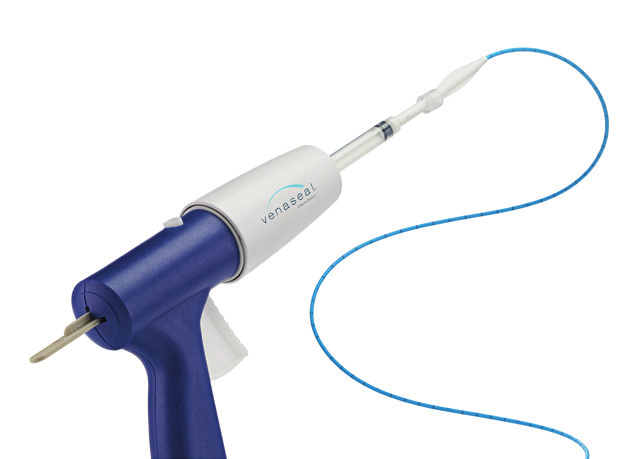
VenaSeal is a non-thermal vein closure treatment in which a medical adhesive is injected into the affected vein to close it.
Extensive tumescent anesthesia is not always required, so depending on the patient's condition it may be considered as a way to reduce the anesthetic burden.
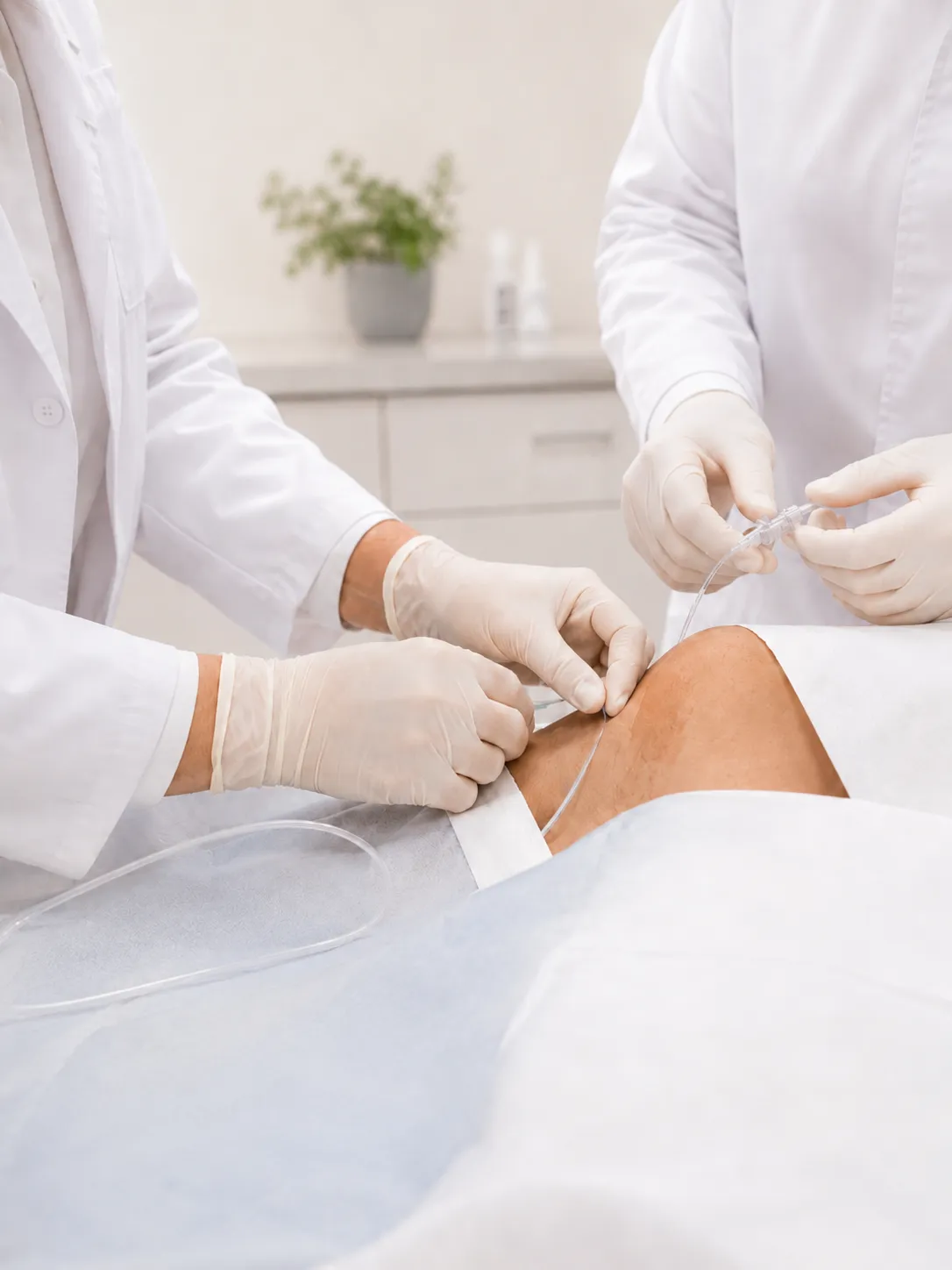
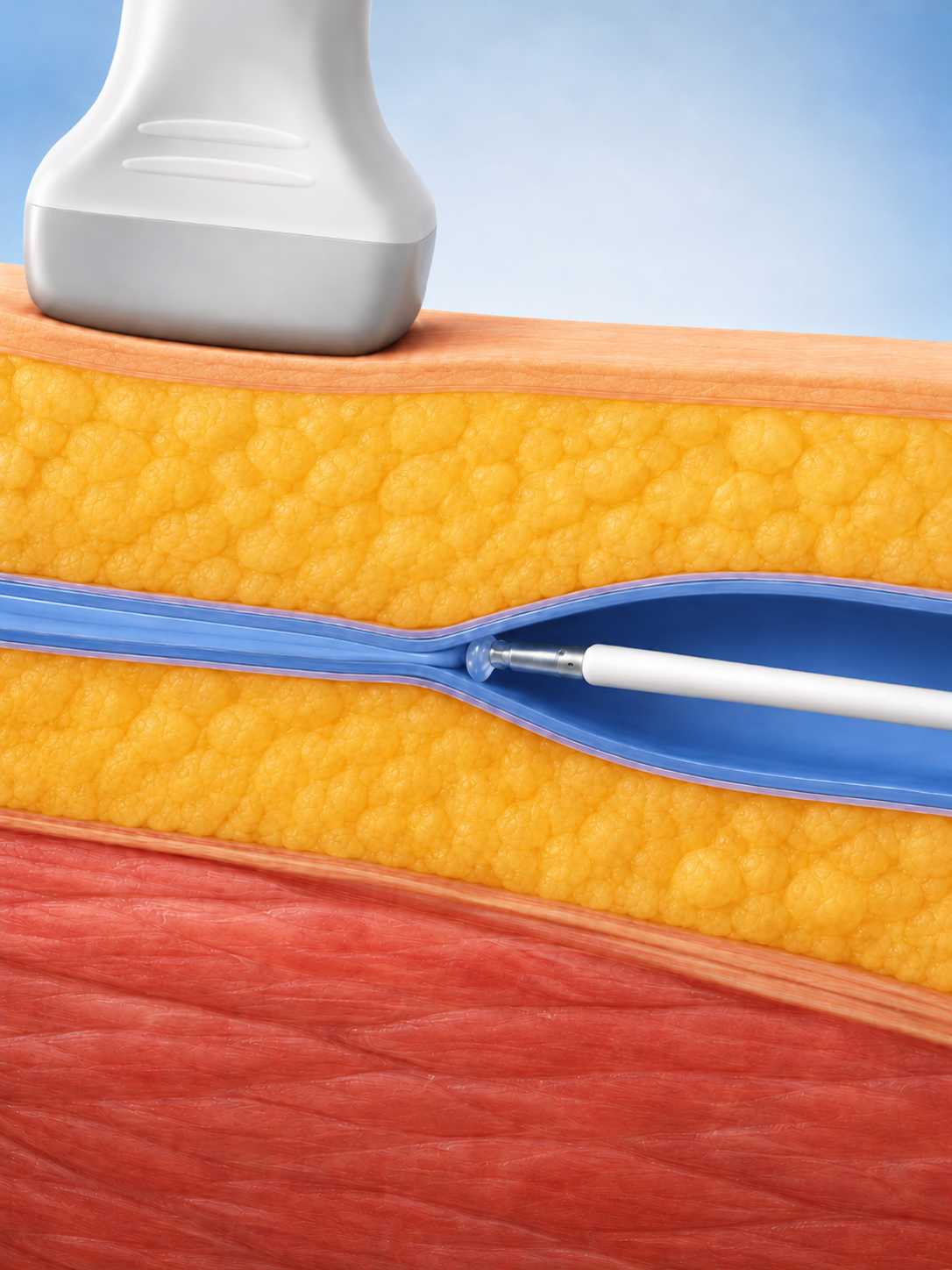
After duplex ultrasound identifies where and how far the reflux extends, a thin catheter is placed inside the vein and the adhesive is delivered to the necessary segments under ultrasound guidance.
The adhesive closes the affected vein, and over time the closed vein is gradually absorbed or stabilizes together with the surrounding tissue.
Because the treatment uses an adhesive, allergic reactions, inflammatory responses and the condition of the vein must also be considered.
Symptoms alone do not mean VenaSeal is needed. In early stages, or when reflux is not clear, conservative care may come first.
A duplex ultrasound is required before VenaSeal. It shows whether VenaSeal is suitable or whether another treatment fits better.
Rather than declaring one treatment better, the right method depends on where and how severe the reflux is, the vein diameter, and how the patient may respond to the agents used.
Because VenaSeal uses a medical adhesive, the possibility of hypersensitivity or an inflammatory reaction to the adhesive must be checked.

VenaSeal is one of the options we consider when it fits the patient's veins. We review it together with radiofrequency, ClariVein, sclerotherapy and conservative care to find the right direction.

Treating varicose veins does not start by choosing a name — VenaSeal, radiofrequency or ClariVein. It starts by finding where and how much the veins in your legs are refluxing, and then deciding the direction that fits.
Book a visit